
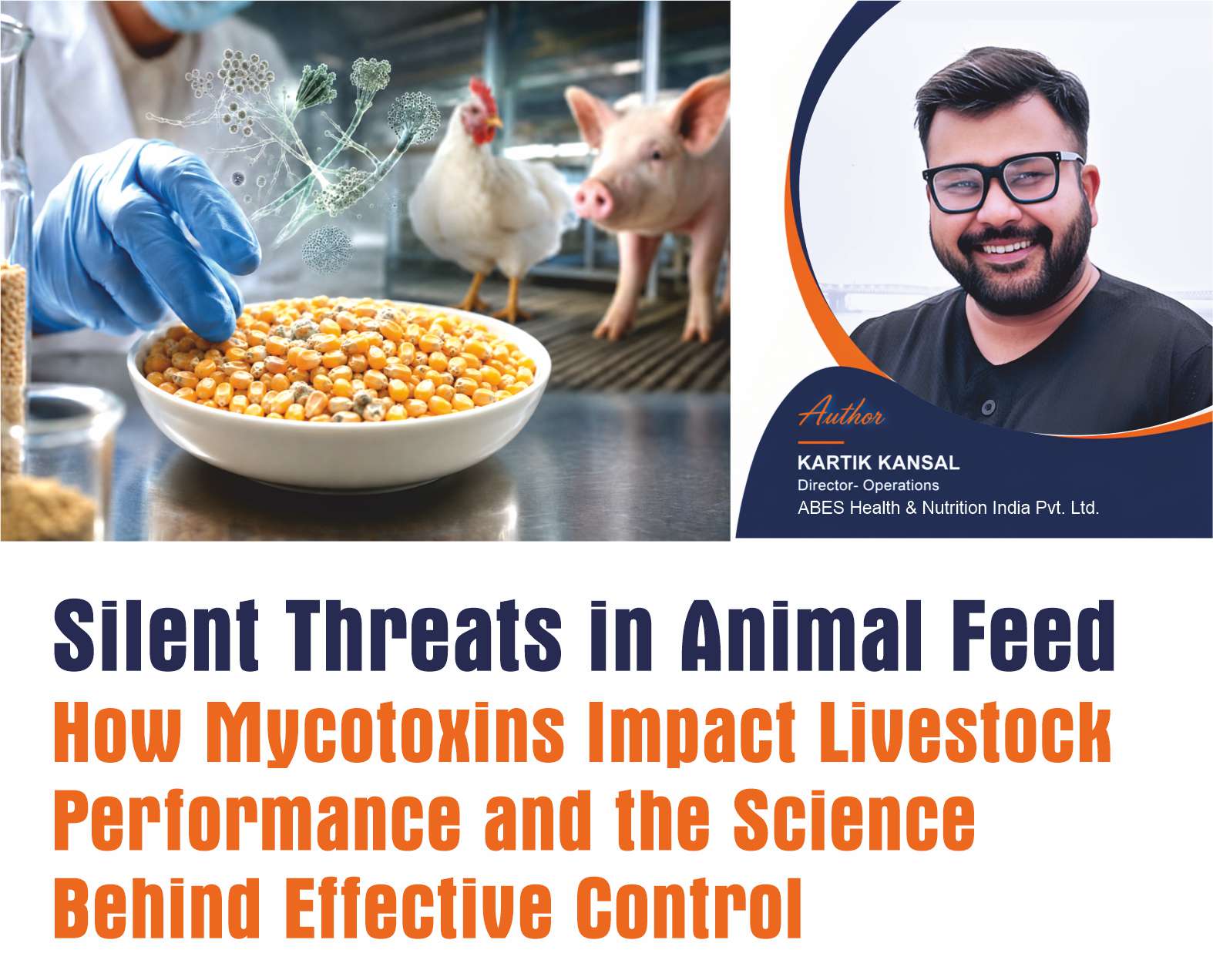

Introduction : Every year, invisible contaminants hidden within grains and feed ingredients silently reduce livestock productivity. Mycotoxins—naturally occurring toxic compounds produced by fungi—are responsible for millions of dollars in economic losses through poor growth, reduced immunity, reproductive disorders, lower feed efficiency, and increased mortality. Although impossible to see with the naked eye, their impact on poultry, swine, and dairy production is enormous.
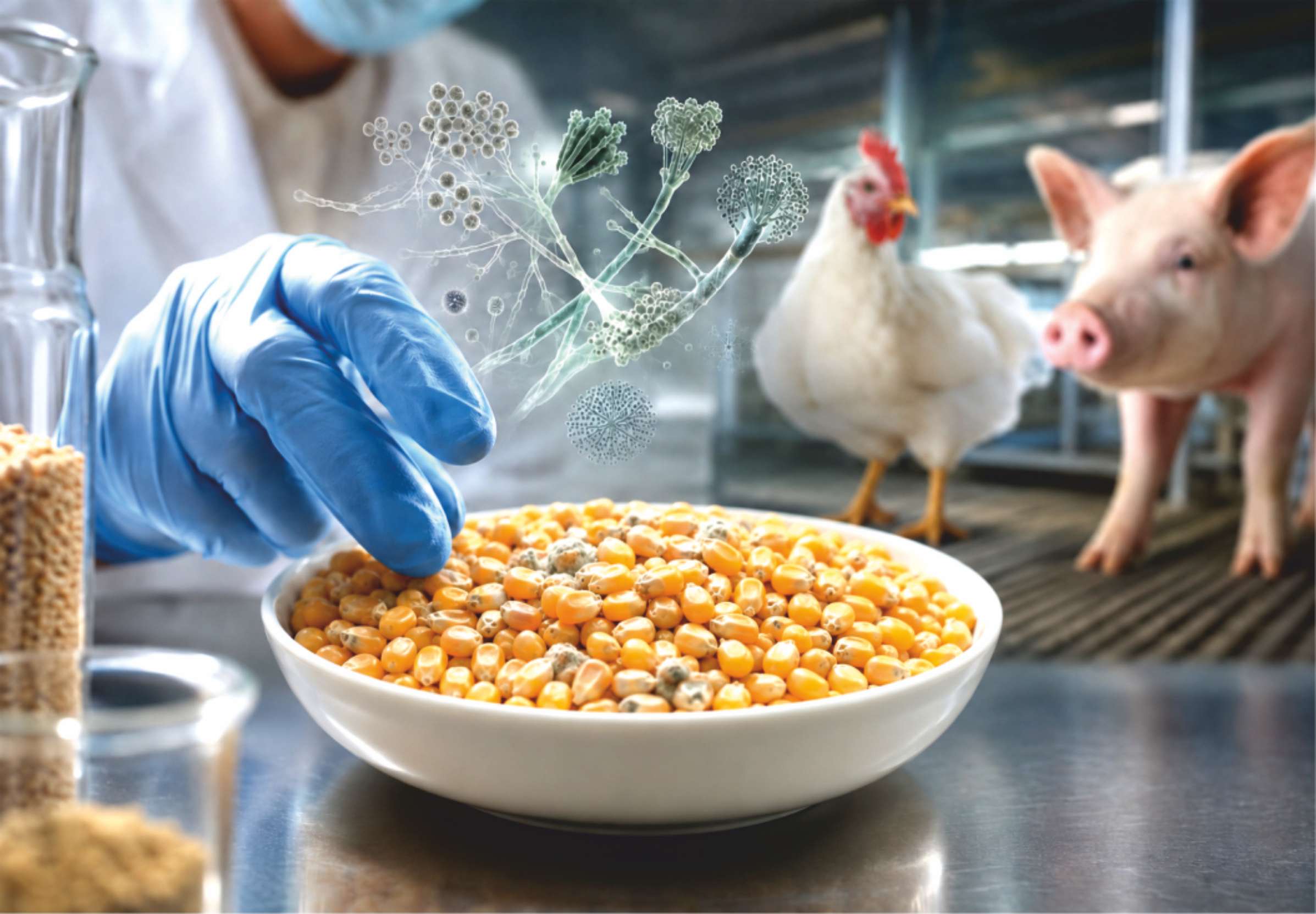
What Are Mycotoxins?
Mycotoxins are toxic secondary metabolites produced by moulds such as Aspergillus, Fusarium, and Penicillium. Scientists have identified over 300 different mycotoxins, and studies indicate that nearly one-quarter of global feed supplies may be contaminated.
The most economically important toxins include:
-Aflatoxins
– Ochratoxins
– Fumonisins
– Deoxynivalenol (DON)
– T-2 Toxin
– Zearalenone
Each affects animals differently, but all reduce productivity and profitability.
Why Do Mycotoxins Develop?
Moulds flourish when four conditions come together:
– Warm temperatures
– High humidity
– Moisture in grains
– Oxygen
Once established, fungal growth continues during harvesting, storage, transportation, and feed manufacturing unless properly controlled.
India’s Mycotoxin Challenge
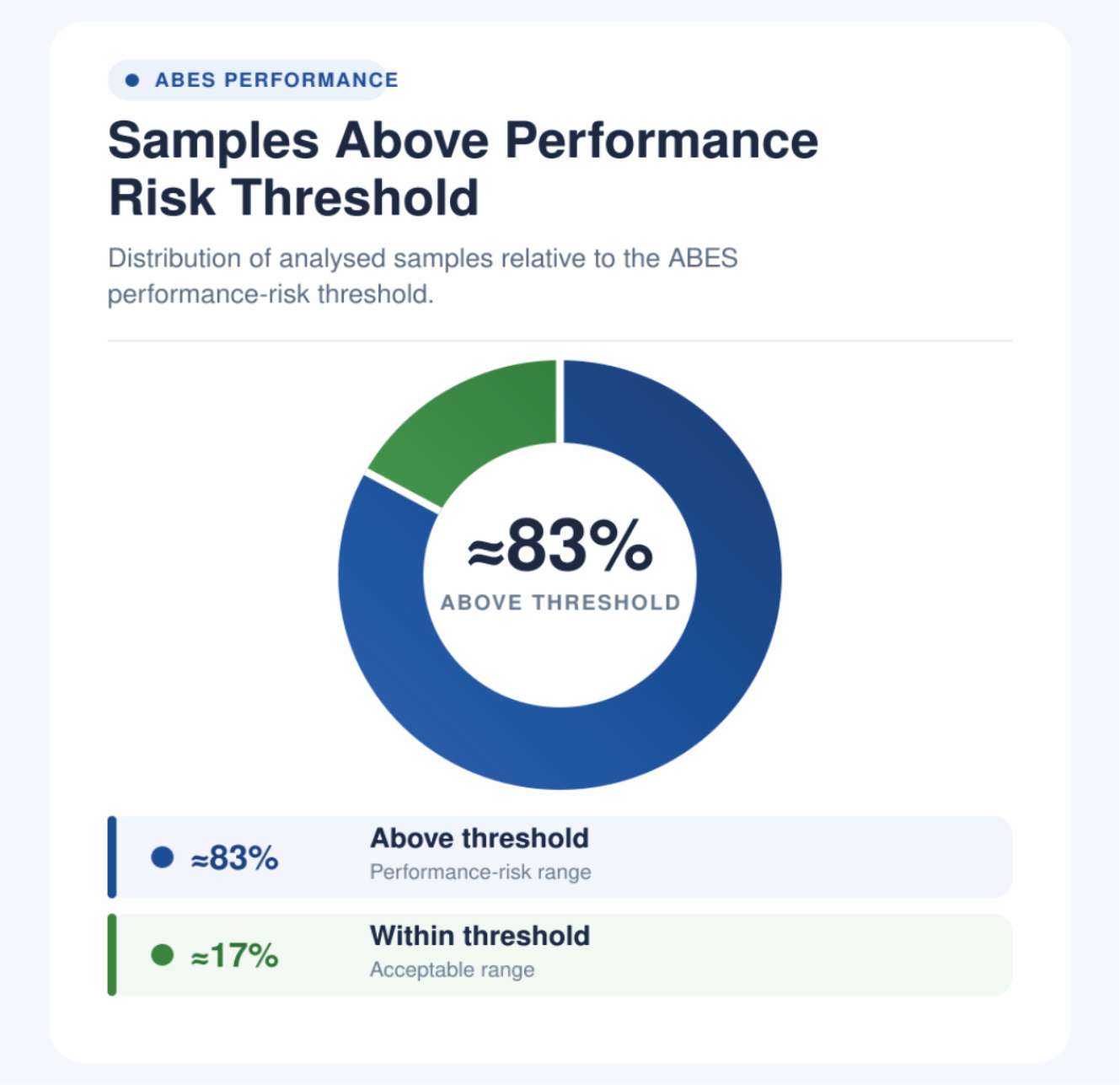
Recent testing presented in the report paints a worrying picture. 6,304 feed analysis, 99% contamination, and 83% above the performance-risk threshold.
Key Findings
 – 6,304 feed analysis conducted
– 99% showed detectable contamination
– 83% exceeded performance-risk thresholds
Among ingredients, DORB, peanut meal, maize, soybean meal, DDGS, and corn gluten all showed significant contamination levels.
Multiple Mycotoxins: A Greater Threat
Animals are rarely exposed to a single toxin.
Instead, feeds commonly contain multiple mycotoxins that interact synergistically, making the combined damage significantly greater than the effect of individual toxins. This explains why even relatively low toxin concentrations can cause substantial production losses.
Economic Impact on Farms
The consequences are visible across every production system.
Poultry
– Lower feed intake
– Reduced weight gain
– Poor feed conversion
– Thin eggshells
– Lower hatchability
– Fatty liver
– Weak immunity
Swine
– Reproductive disorders
– Embryonic mortality
– Vomiting
– Reduced growth
– Feed refusal
– Tail necrosis
– Liver and kidney damage
Ultimately, these problems translate directly into economic losses through poorer animal performance.
The Hidden Cost: Immune Suppression
– One of the most damaging effects of mycotoxins is their ability to suppress the immune system.
– Animals become more vulnerable to bacterial and viral infections while showing reduced responses to vaccines and treatments.
– This means disease outbreaks become more severe and recovery becomes slower.
Can Nutrition Help?
Nutritional interventions can reduce the impact of toxins.
Recommended approaches include:
– Higher amino acid supplementation
– Vitamins E, C, and D3
– Selenium
– Choline chloride
– Liver-support products
– Mold inhibitors
– Broad-spectrum toxin binders
These measures improve resilience while reducing toxin damage.
Scientific Toxin Elimination Management (STEM-500)
An effective strategy combines four complementary actions:
1. Prevention
Prevent fungal growth before toxins develop.
2. Elimination
Bind multiple mycotoxins irreversibly.
3. Neutralization
Use enzymatic systems to neutralize toxins.
4. Gut Ecology Enhancement
Improve gut health while strengthening immunity and reducing pathogen pressure. This integrated approach offers broader protection than relying on toxin binders alone.
Featured Solution: STEM-500
The presentation introduces STEM-500, a multi-component toxin management product formulated with:
– Specially treated HSCAS
– Organic acids
– Oxine Copper
– MOS
– Bio-active phytocompounds
– Polyphenols
– Lactobacillus
– Lipotropic agents
According to the presentation, the product is designed to reduce mould growth, bind multiple mycotoxins, minimize endotoxin effects, improve liver function, support gut health, and enhance feed conversion, growth, and survival.
Conclusion
Mycotoxins remain one of the most significant hidden threats in modern animal production. Since contamination can occur throughout the grain supply chain, prevention alone is rarely sufficient. A comprehensive management strategy—combining mould control, toxin binding, detoxification, and gut health support—is essential for maintaining animal health and maximizing production efficiency.