

Moisture Optimization and Mold Control:
An Integrated Approach to Improving Feed Quality,
Shelf Life, and Feed Mill Profitability in Tropical Climates
Dr. Maloshrie Bora, Senior Program Manager – Feed Safety, Trouw Nutrition South Asia
Across India and South Asia, feed manufacturers today face a common challenge: producing safe, stable, high-quality feed while navigating increasingly variable climate conditions, fluctuating raw material quality, rising production costs, and greater demands for feed efficiency.
Among the many factors that influence feed quality, moisture management remains one of the most underestimated. Yet moisture directly impacts pellet quality, nutrient preservation, feed hygiene, shelf life, production throughput, and overall profitability. Improper moisture management can result in shrinkage, spoilage, mold proliferation, nutrient losses, increased fines, and reduced mill efficiency. Conversely, optimized moisture control can generate significant economic returns while improving feed quality throughout the supply chain.
The Hidden Economics of Moisture Loss
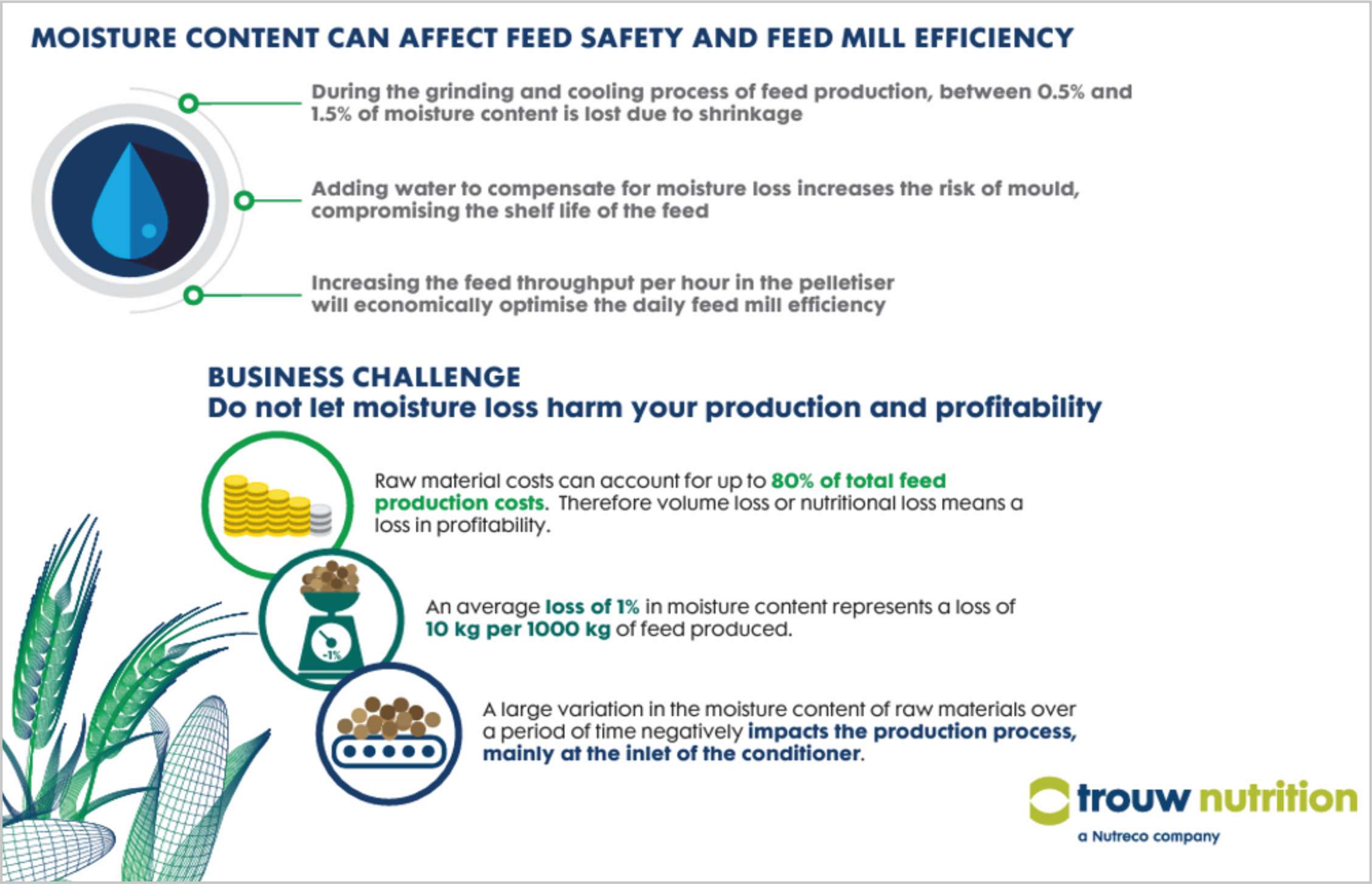
During feed manufacturing, moisture is lost at several stages, including grinding, conditioning, pelleting, cooling, storage, and transportation. Industry observations indicate that feed mills can lose between 0.5% and 1.5% moisture during production, resulting in direct shrinkage and reduced profitability. A feed mill producing 500 tonnes per day can lose approximately 5 tonnes of saleable product for every 1% moisture reduction. In an industry where margins are constantly under pressure, minimizing process losses represents a substantial opportunity for value creation.
Why Adding Water Alone Does Not Solve the Problem
A common industry practice for compensating moisture losses is the addition of water during feed processing. While this may appear straightforward, water possesses high surface tension and does not distribute uniformly throughout the feed matrix. Instead, free moisture often remains on the surface of feed particles, increasing water activity and creating favourable conditions for microbial growth. The challenge for the modern feed industry is therefore not simply increasing moisture content, but ensuring moisture is effectively distributed and retained throughout the feed while maintaining microbial stability.
Mold Growth: A Feed Quality and Profitability Threat
Molds are among the most significant biological threats to feed quality. Beyond visible spoilage, molds consume valuable nutrients, reduce energy content, affect feed palatability, shorten storage life, and create conditions favourable for mycotoxin production. The economic implications can be significant. Raw materials often constitute up to 80% of total feed production costs. Any reduction in nutritional value, shelf life, or feed volume directly impacts both manufacturers and producers downstream.
Emerging Scientific Approaches to Mold Inhibition
Advances in feed preservation technology have moved beyond conventional organic acid applications. Modern solutions increasingly combine multiple modes of action to optimize efficacy under practical feed manufacturing conditions. These technologies typically integrate:
Organic acids
– Buffered acid systems
– Moisture management agents
– Surfactants and emulsifiers
– Synergistic bioactive compounds
Such approaches improve moisture distribution, enhance contact between active ingredients and microbial cells, and prolong preservation effectiveness throughout storage. This scientific evolution reflects the industry’s transition from simple preservation strategies toward integrated moisture and microbial management systems.
Commercial Validation: Integrating Moisture and Feed Hygiene
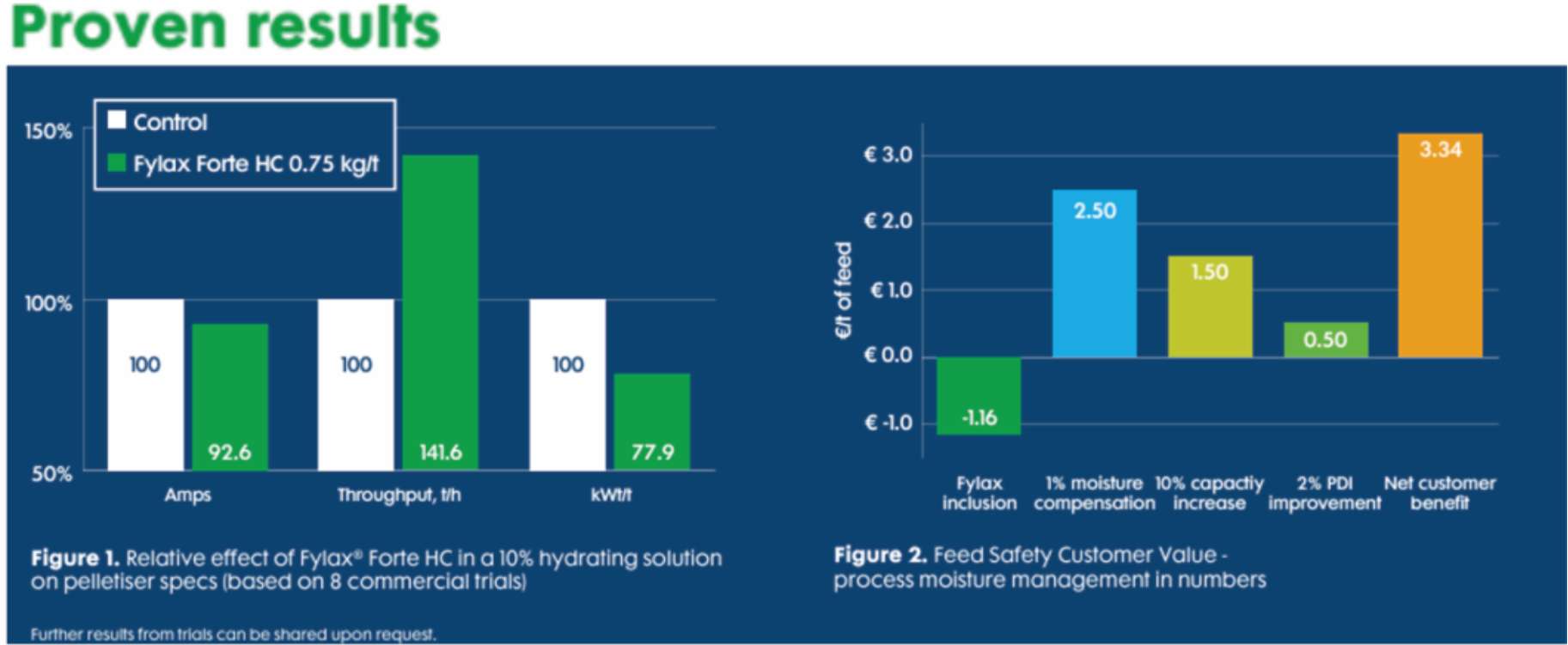
Research and commercial evaluations have demonstrated that moisture management and mold control must work together. In one reported study, the addition of plain water alone reduced feed shelf life by approximately 33%. However, when moisture was combined with an integrated mold inhibition program, shelf life improved compared to untreated feed while preserving feed quality and stability. Additional commercial applications have shown benefits including:
– Improved feed mill throughput
– Enhanced pellet durability
– Reduced reprocessed fines
– Better moisture retention
– Improved production efficiency
– Greater feed stability during storage
These findings highlight that effective moisture optimization depends on simultaneously managing microbial risks
A Modern Approach for South Asia
Recognizing the unique challenges faced by feed manufacturers in tropical climates, Trouw Nutrition has developed integrated solutions specifically designed to optimize moisture management and feed hygiene.
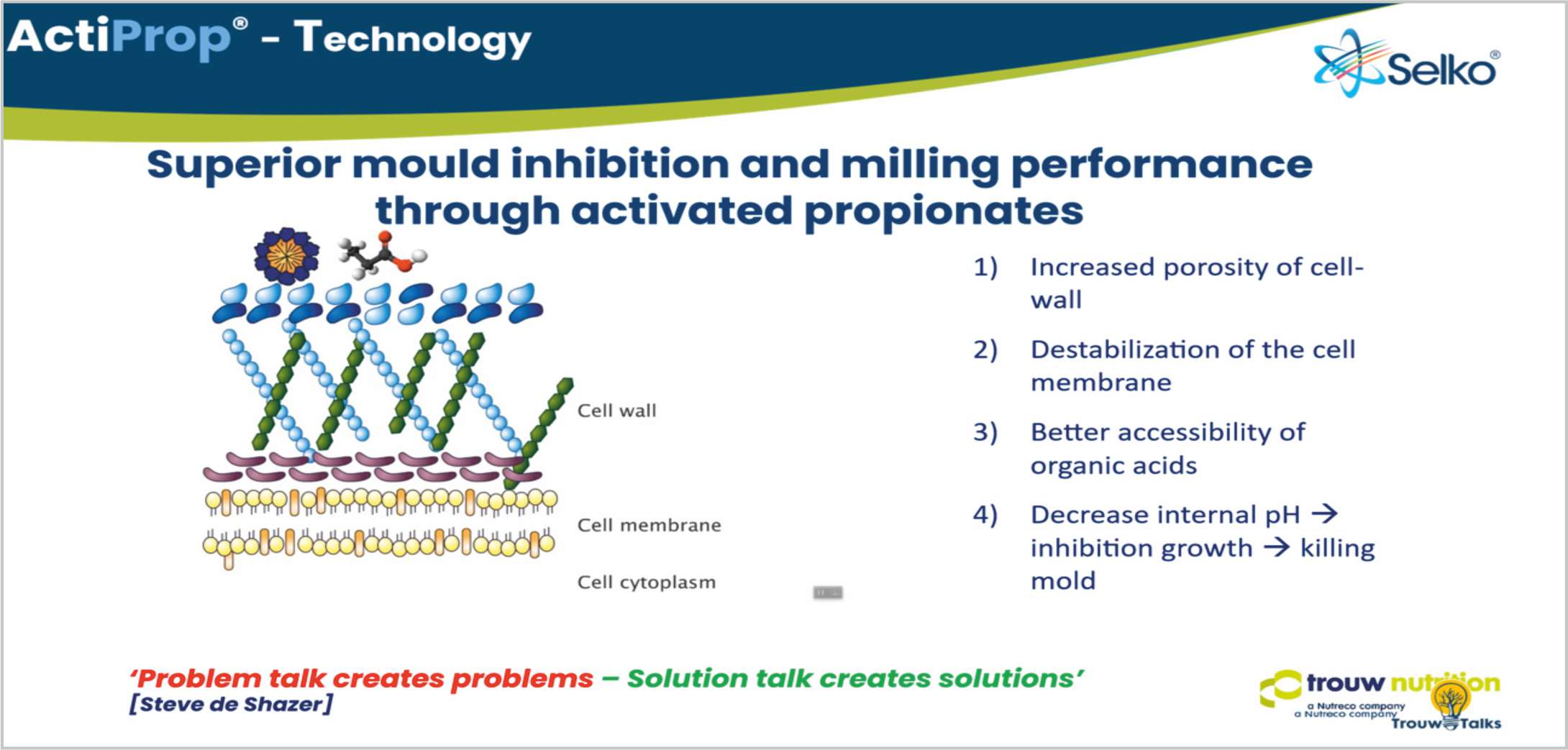
Among these solutions is the Fylax® portfolio, which combines organic acid technology, moisture management agents, surfactants, and the proprietary ActiProp® technology platform. The objective is to improve moisture distribution, enhance mold inhibition, preserve nutrient value, and support feed mill efficiency within a single integrated program. ActiProp® technology works by increasing mold cell wall permeability and improving access of active ingredients to microbial targets, resulting in enhanced preservation performance compared with conventional approaches. At the same time, moisture-management components facilitate more uniform distribution of moisture within the feed matrix, helping improve operational efficiency and shelf-life outcomes.
In today’s feed industry, moisture management can no longer be viewed simply as a processing parameter—it is a critical driver of feed quality, feed safety, and profitability. As feed manufacturers across India and South Asia face increasing challenges from humidity, raw material variability, and shelf-life pressures, an integrated approach that combines moisture optimization with effective mold control is becoming essential. By preserving nutrient value, reducing shrinkage, improving pellet quality, and enhancing microbial stability, modern feed hygiene solutions can help mills achieve greater operational efficiency while delivering safer, more consistent feed to livestock producers. Ultimately, successful feed preservation is not just about preventing spoilage—it is about maximizing value throughout the feed-to-food chain.