

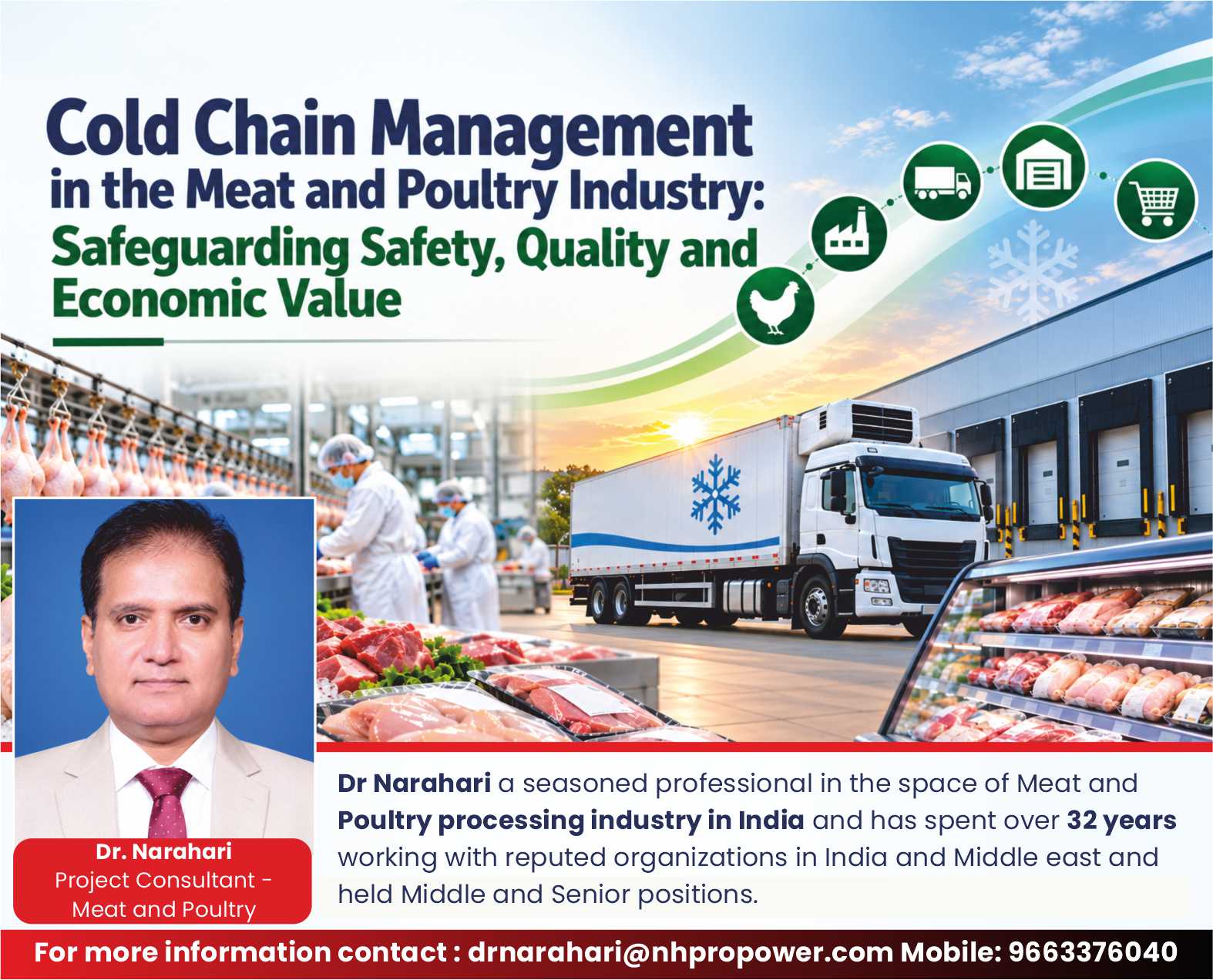
Dr Narahari a seasoned professional in the space of Meat and Poultry processing industry in India and has spent over 32 years working with reputed organizations in India and Middle east and held Middle and Senior positions. Graduated from Bangalore veterinary college during the year 1989 and completed PG diploma in Animal Husbandry from ITCPH, Philippines under Netherlands fellowship programme. His organization NH ProPOWER Consultancy services, Bangalore offers end to end solutions for Meat and Poultry processing, Further processing, Retailing and QSRs, currently doing projects in India, Middle East and Africa.
Meat and poultry are nutrient-dense foods that supply high-quality protein, essential amino acids, iron, zinc, and vitamin B12. The same features that make them nutritious, such as high moisture, abundant nutrients and a relatively favourable pH, also make them highly perishable. The scale of the post-process/post-harvest/post-slaughter spoilage issue is particularly important in India. The Department of Animal Husbandry and Dairying reported a total meat production of 10.50 million tonnes in 2024–25, with poultry contributing approximately 49% of the total. A NABCONS study published in 2022 estimated post-harvest losses of 2.34% for meat and 5.63% for poultry meat. If the estimated poultry loss rate were applied illustratively to 2024–25 production, the quantity affected would be approximately 0.29 million tonnes. Such loss also wastes the feed, water, veterinary inputs, labour, energy, packaging, transport and processing capacity already invested in the product. This article aims to explain the scientific and operational principles of cold-chain management in the meat and poultry industry and to highlight its importance in maintaining food safety, product quality and Shelf life.
Why rapid cooling matters
After slaughter, blood circulation and natural defence mechanisms in the organisms cease. However, the residual heat remains in the carcass and helps endogenous enzymes to continue their action, causing enzymatic or autolytic spoilage. This is the beginning of spoilage. Microbial spoilage develops later in the meat products as microorganisms multiply. The exposed tissues of the meat or poultry can acquire microorganisms during dressing, evisceration, cutting, and handling. Lower temperatures help reduce the rate of spoilage by inhibiting enzyme activity and microbial growth.
However, the concept of cold chain is more than just storage at a lower temperature. From slaughter to consumption, cold chain management involves a coordinated system of temperature, time, hygiene, airflow, packing, and documented monitoring to ensure the safety and quality of the products.
Microbial contamination may include spoilage organisms and pathogens. Spoilage may become visible as slime, discolouration, excessive drip, rancid flavours or objectionable odours. Pathogenic contamination is more dangerous because organisms such as Salmonella, Campylobacter, pathogenic Escherichia coli and Listeria monocytogenes may be present without producing any obvious change in appearance, smell or taste. Refrigeration slows microbial multiplication, enzymatic reactions and lipid oxidation, but it does not sterilize the product or correct poor hygiene. Also, some psychrotrophic microorganisms (Eg., Shewanella putrefaciens, Candida spp) can continue to grow slowly at refrigeration temperatures and cause spoilage during extended refrigerated storage.
Poultry generally deteriorates faster than intact red-meat carcasses because slaughter and portioning create a large exposed surface, while skin folds, feathers and intestinal contents increase the opportunities for cross-contamination. Mincing creates an additional risk by increasing surface area and distributing surface contamination throughout the batch. Temperature and exposure time must therefore be controlled. Even a brief rise in temperature during loading, transport or retail display can shorten the product’s remaining shelf life.
The cold-chain journey and its principles
The cold chain begins immediately after post-mortem inspection. Primary chilling removes carcass heat rapidly and uniformly, while secondary chilling maintains the required condition during holding, cutting, deboning, packing and dispatch. For example, European Union Regulation No. 853/2004, establishes that, after post-mortem inspection, the animals must be immediately taken to a refrigerated environment in the slaughterhouse. This medium must guarantee an internal temperature of the meat that does not exceed 3°C, in the case of offal, and ≤ 7°C for the rest of the meat, and it will be ≤ 4ºC for poultry, subject to the applicable legislation and processing system. However, these limits do not replace process validation. Regulatory compliance mandates that these temperature limits serve as benchmarks rather than absolute substitutes for process validation. The thermal history of the product must be empirically verified to ensure that the “slowest-cooling part” (typically the geometric centre) reaches the target temperature within a short duration. This requirement necessitates monitoring chilling curves to ensure a continuous, steady decrease in temperature to prevent any thermal plateaus that could allow for pathogen recovery or exponential growth.
A graph of the temperature of the product vs time is called a cooling curve. This provides stronger evidence about the product temperature than room temperature alone. A cold room can show the correct air temperature, but the centre of a carcass or dense carton or tightly packed pallet may remain warm. Representative product-temperature measurements can identify overloading, insufficient refrigeration capacity, blocked airflow, excessive door opening, defrost effects and poorly positioned evaporators. Also surface temperature and exposure time may contribute to microbial growth. Therefore, monitoring points should be selected through temperature mapping and process validation.
The industry employs various low-temperature chilling and freezing systems. They offer different advantages, and their applications vary by product type. Air chilling uses forced cold air and depends on temperature, velocity, humidity, carcass size, and spacing. Immersion chilling cools poultry rapidly but requires strict water-quality and cross-contamination control. Spray chilling combines cold air chilling with intermittent water spray, and can reduce dehydration of the products. Blast freezing uses very cold, high-velocity air, while plate freezers are suitable for flat, uniformly shaped packages. Warm products should not enter a long-term store designed mainly to hold already-frozen goods. A validated freezing process should be used to reduce their core temperature to the specified level, commonly −18°C or below.
The product quality should be suitable for the target market. Chilled beef is generally stored at temperatures between 0 and 4°C (without freezing). Therefore, its shelf life is limited, and the temperature must be kept constant. Superchilling holds the product slightly below its initial freezing point and can extend storage while limiting ice formation, although temperature uniformity is critical. Frozen storage at −18°C or below substantially slows microbial and chemical deterioration but does not reverse earlier temperature abuse. Freezing rate, packaging, fat content, storage duration and thawing practices influence drip loss, oxidation, texture and overall acceptability.
Importance of hygiene, zoning and packaging
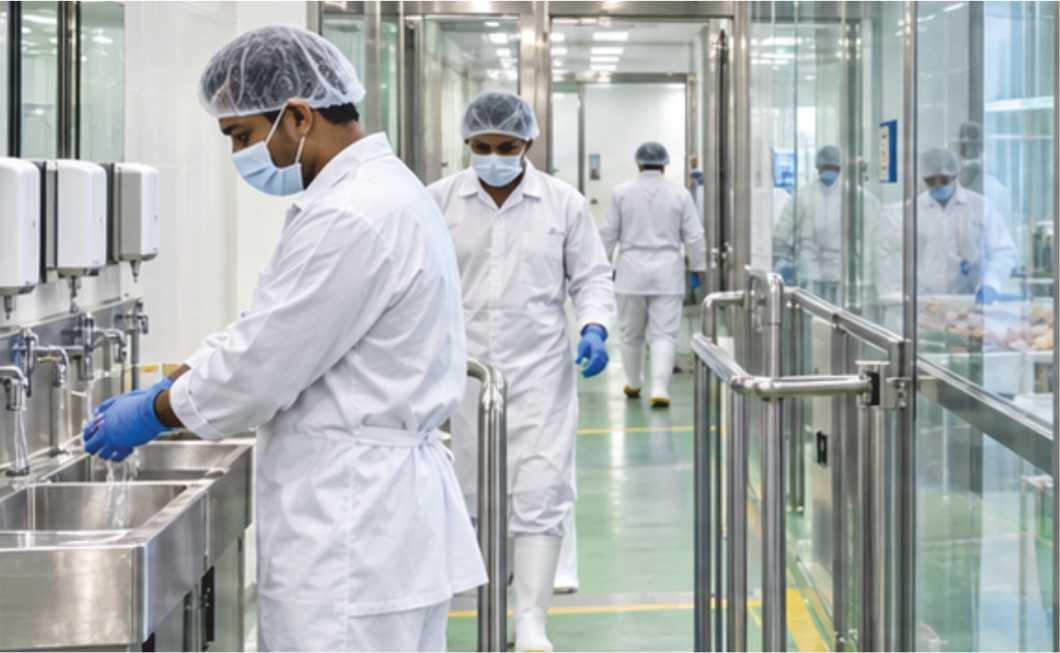
Low temperature cannot compensate for contamination from hands, clothing, knives, conveyors, crates, drains, aerosols or poorly cleaned surfaces. Hygienic plant design should establish one-way movement from dirty or live-animal areas towards cleaner cutting, packing, chilling and dispatch zones without backtracking. Raw and ready-to-eat operations require effective separation. Protective clothing, handwashing, knife sterilization, pest control, drainage, condensate management, sanitation procedures and microbiological verification are essential components of cold-chain control.
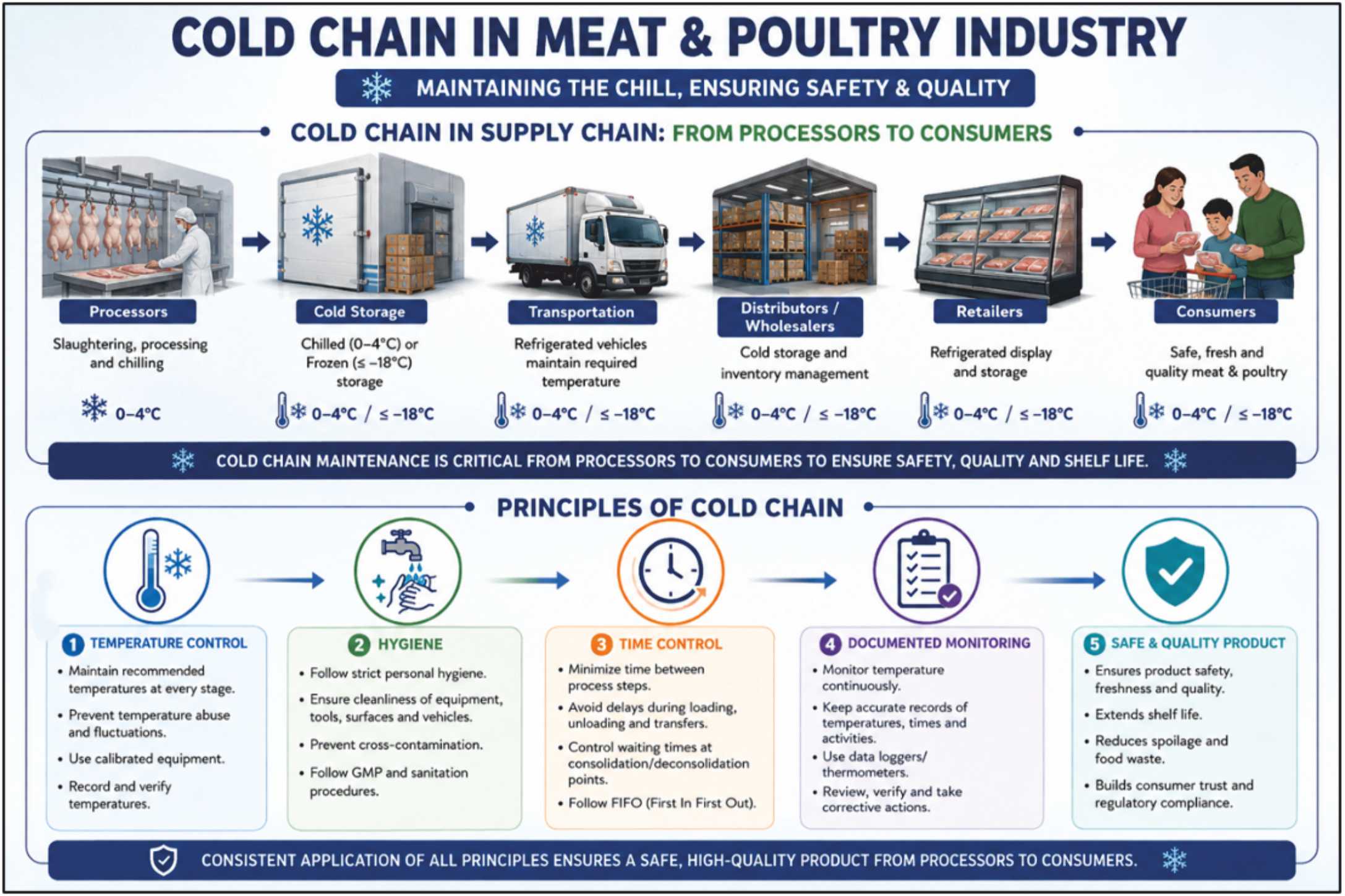
Figure 1: Cold chain in meat and poultry industry and the principles of cold chain
Packaging supports temperature control but does not replace it. Vacuum packaging reduces oxygen and may extend chilled shelf life, while modified-atmosphere packaging can suppress selected aerobic spoilage organisms and help maintain product colour. However, packaging changes the microbial ecology rather than eliminating microorganisms. Seal integrity, gas composition, product temperature and the possible growth of anaerobic or facultative organisms must therefore be considered during shelf-life validation. Shelf life should be established for the actual formulation, initial microbial load, processing method, packaging system and distribution pattern rather than copied from a generic table.
Distribution, retail and monitoring
Refrigerated vehicles should maintain the temperature of pre-cooled products rather than perform primary chilling. Vehicles should be cleaned, inspected and pre-cooled before loading. Loading must be rapid, doors should remain open for the shortest practicable time and cartons should be arranged to preserve airflow. Overloading, warm loading, damaged door seals and delays at transfer points can create temperature gradients and warm pockets. At retail, products should move quickly into cold rooms or display units. Display cases should not be filled above their designed airflow line, while cutting and mincing should be undertaken in small batches under chilled conditions.
Documented monitoring converts refrigeration from an assumption into verifiable control. Records should include product core or surface temperature, room and vehicle temperature, door-opening duration, refrigeration performance, sanitation results, lot identity and handover time. Calibrated data loggers, time–temperature indicators, GPS-linked sensors and Internet of Things platforms can provide continuous histories and real-time alarms. When a deviation occurs, personnel should isolate the product, evaluate its time–temperature history and safety, document its disposition, correct the immediate problem, identify the root cause and verify the effectiveness of corrective action.
Cold chain capacity, compliance and sustainability
Cold chain capacity should be designed based on peak throughput and total heat load, rather than average production and room volume alone. The product mix, incoming temperature, fresh-to-frozen ratio, pack size, chilling or freezing time, dwell time, door openings, dispatch frequency, weekend stock and future growth are all things designers need to consider. Refrigeration calculations should consider product heat, transmission through walls, air infiltration, people, lighting, motors and defrost loads. A bottleneck in chilling, blast freezing, staging, loading docks or refrigerated transport can compromise the entire system even when the nominal storage capacity appears adequate.
In India, compliance requires an appropriate FSSAI license, hygienic infrastructure, product and labelling standards, traceability and proof of temperature control. Export operations may also require APEDA approvals, veterinary certification and compliance with residue monitoring and specifications required by the exporting country. Codex CXC 58-2005 proposes a risk-based approach to meat hygiene. European regulations and the UNECE ATP Agreement constitute established references for hygienic production and temperature-controlled transport.
Conclusion
A reliable meat and poultry cold chain is not simply a cold room or refrigerated truck. It is an uninterrupted, validated and documented management system. When temperature, time, hygiene, airflow, packaging, capacity and human discipline are controlled together, the cold chain reduces spoilage, extends saleable life, supports market access and protects public health and the economic value embedded in every kilogram of product. In the future, cold chains should combine food safety with environmental sustainability through improved insulation, efficient compressors, lower-global-warming-potential refrigerants, renewable electricity, heat recovery, preventive maintenance and digital traceability. Sustainable cold-chain development is important because refrigeration protects food availability, but inefficient cooling systems can also contribute substantially to energy demand and greenhouse-gas emissions.
References are available on request.