

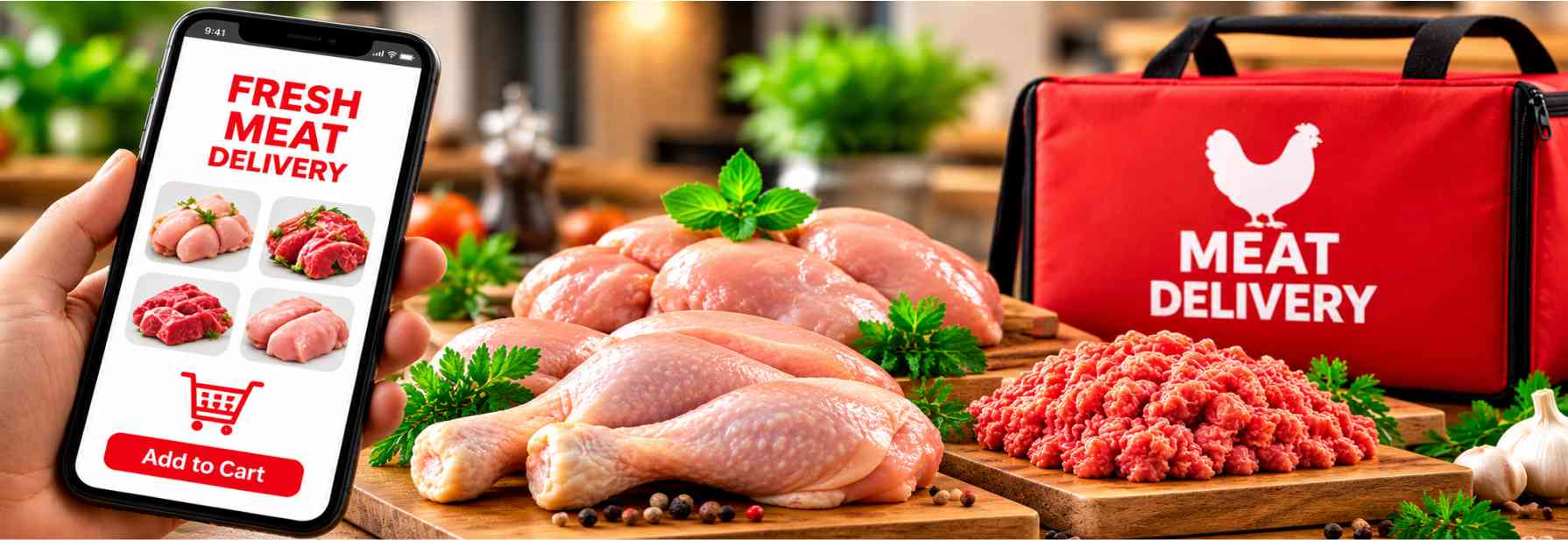
 India’s online meat delivery segment is a relatively young but rapidly growing part of the food e-commerce ecosystem. It is transforming how consumers access fresh and frozen meat, seafood, and processed meat products through websites, mobile applications, online marketplaces, and increasingly, quick-commerce platforms.
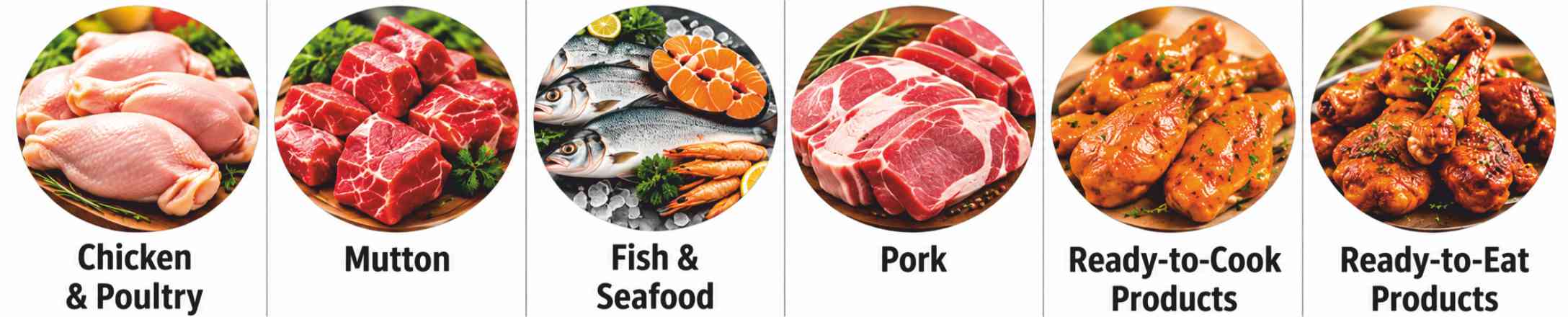
Recently I was featured on The Core for a podcast hosted by Ms. Kudrat Wadhwa, Journalist and Podcast Producer, where we discussed the evolving landscape of India’s online meat and meat products delivery industry. During the discussion, I shared perspectives on the key product categories driving this segment, including chicken and other poultry products, mutton, fish, seafood, pork, and ready-to-cook and ready-to-eat meat products. Poultry remains a particularly important category, with chicken being a widely consumed and highly relevant product in the online meat delivery market. India’s poultry sector, estimated at around US$30 billion, also supports the livelihoods of nearly six million people across the value chain, highlighting its significant economic and social contribution.
My sincere thanks to Ms. Kudrat Wadhwa and The Core for the opportunity to share my perspectives on this important and evolving industry. The key questions discussed during the podcast, along with my responses, are being shared through this write-up to provide readers with deeper insights into India’s online meat delivery industry, its growth drivers, emerging opportunities and the evolving role of poultry and other meat products in the country’s food ecosystem.
“Poultry remains a particularly important category, with chicken being a widely consumed and highly relevant product in the online meat delivery market. India’s poultry sector, estimated at around US$30 billion, also supports the livelihoods of nearly six million people across the value chain”
1. Why are online meat platforms increasingly moving into physical stores or offline retail? What has changed in the economics of
selling meat online?
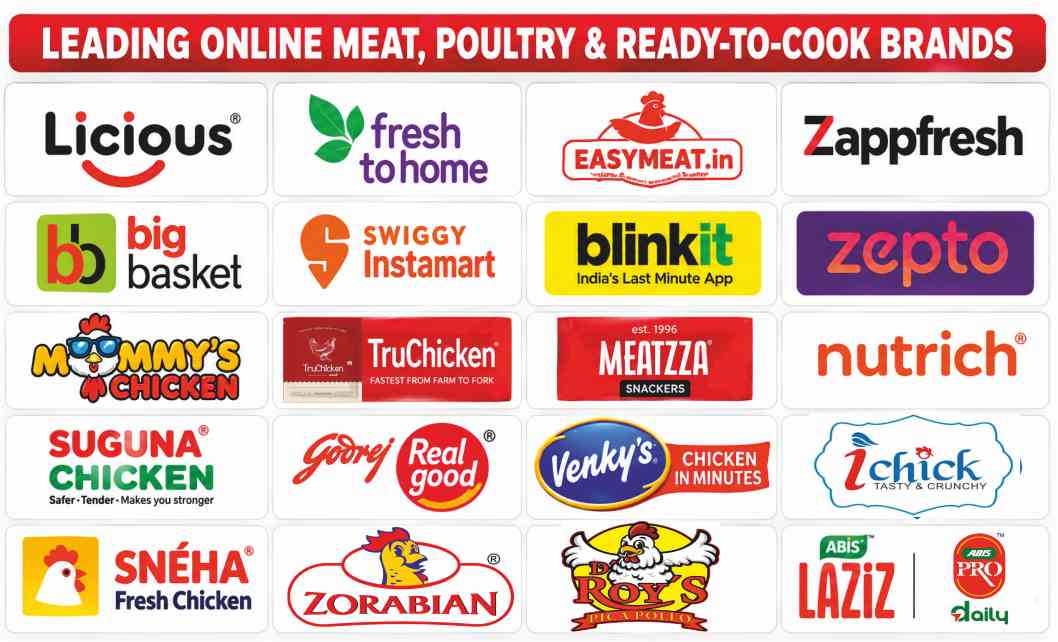
Ricky Thaper: Since Covid-19 pandemic, there has been a significant increase in consumers ordering meat products online and major delivery players like Fresh To Home, Licious, Zappfresh and BigBasket have seen significant growth especially in major cities and metros across the country.
These online meat products delivery companies have launched their retail outlets mostly used as cluster delivery points for improving operational efficiency. These retail points by online players also help boost and expand brand outreach.
2.Has online meat buying actually become mainstream in India, or is it still a relatively small part of the overall meat market? If possible, what share of sales would you estimate comes through organised /online channels?
Ricky Thaper: Estimated market of online meat delivery businesses vary a lot. Some estimates put it currently at around Rs 2500 crore to Rs 3000 crore is growing steadily.
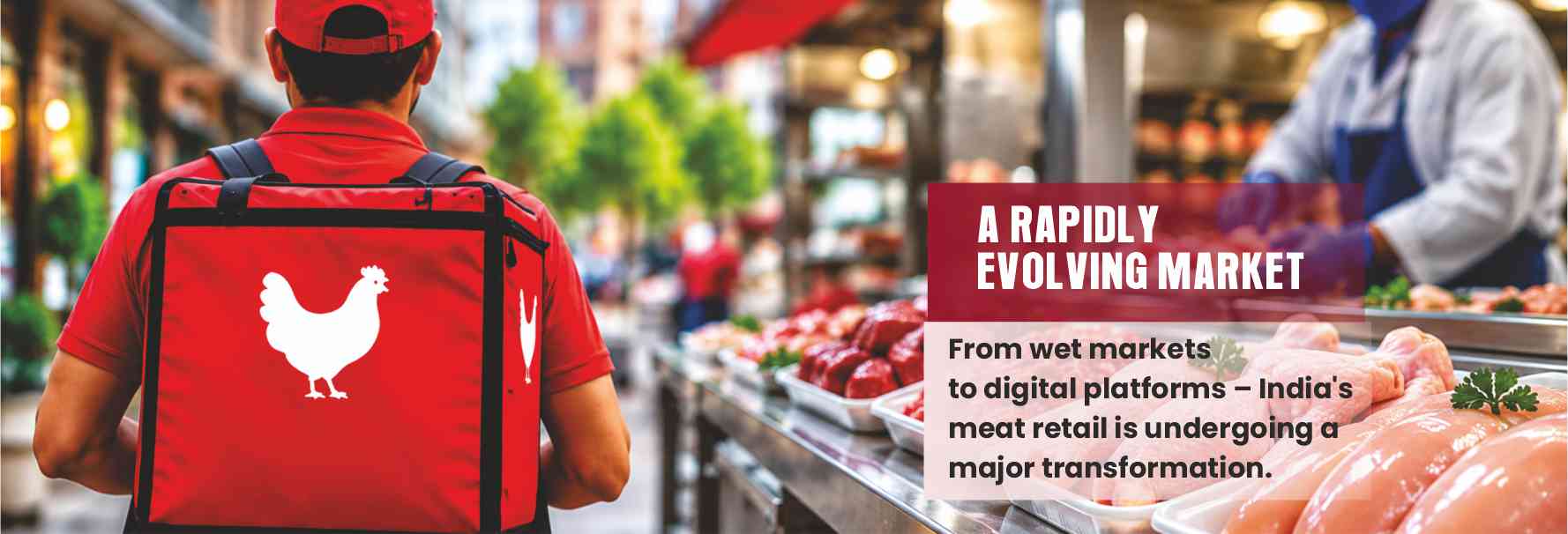
It’s still a relatively small market compared to the overall meat products economy. Metros such as Bengaluru, NCR Delhi, Mumbai, Kolkata, Chennai and several other cities are major hubs of online meat products delivery.
3. What makes meat different from other groceries when it comes to selling online? Is the cost of cold-chain, last-mile delivery
and processing a major constraint?
Ricky Thaper: The biggest operational challenge is maintaining the cold chain infrastructure while controlling delivery costs and product wastage. Meat is highly perishable, advance demand forecasting, inventory management, temperature control and delivery speed are critical to the business of online delivery of these products. FSSAI-certified abattoir/processing facilities are critical infrastructure needed for the industry.
4. Are consumers still more comfortable buying meat from a neighbourhood butcher? What do they value there that online platforms haven’t been able to replicate?
Ricky Thaper: Consumers still prefer buying from retail outlets for meat products as there is a perception that products in physical outlets are more fresh and for years people have been buying meat products from dedicated retailers in the neighbourhood. However, online delivery of these products is gradually becoming the norm, especially in major cities because of ease of delivery and convenience. Online meat delivery players have also focussed on the quality aspects thus graining consumers interest and following.


5. What are the biggest costs for an online meat company between the slaughterhouse and the customer’s kitchen? Has that cost structure made the pure-play delivery model difficult to sustain?
Ricky Thaper: The demand anticipation and coordination with slaughter facilities and subsequently processing of meat and quick delivery to consumers are the major cost points for online players. As stated earlier, as the meat products sector gets more organised both pure retailers as well as online players would co-exist and grow especially bigger urban centres. There are consumers who depend on both modes for getting their meat and processed products. Replicating quick commerce models by online players would be challenging as meat is a highly perishable product thus delivering the products within an hour would be challenging. However the retail hubs being created by online players, faster delivery of products to consumers can be organised.
6. Do physical stores solve some of these problems? For example, can a store serve as a pickup point, increase order density or make the economics of each delivery better?
Ricky Thaper: Yes several online meat products delivery players have set up retail stores or regional hubs to cater to large consumers with a shortest possible time. Stores are also serving pick up points.
7. We’ve seen several meat and grocery companies experiment with different formats, from home delivery to dark stores to physical outlets. What business model do you think is emerging in this sector?
Ricky Thaper: There are combination models emerging with more investment going into cold storage and abattoir facilities. For online players, physical stores functioning as regional or locality based hubs would help large supplies in the shortest possible time. Even the wet market is investing in cold storage facilities along with safer transportation of animals considering their health and storage of products in refrigerators.
8.Is the shift offline also a sign that consumers want to see and choose fresh meat themselves? How important are factors like freshness, trust and the ability to customise a cut?
Ricky Thaper: These are very critical aspects for winning the consumers’ trust. Even online players are offering fresh products with custom cuts such as Bengali cut fish, boneless fish/meat, well washed products etc. Through various campaigns, online players have been able to win over consumers especially in the processed and marinated segments (ready to cook and ready to eat segments). Physical stores are also improving their appearances and cleanliness. Still a chunk of consumers are buying at retail stores, especially freshly culled poultry meat.
9. How is organised meat retail changing the traditional butcher market? Are you seeing small butchers lose customers, or is the organised sector still too small to have a meaningful impact?
Ricky Thaper: Traditional butcher markets still have a major share in meat products segments. However, cleanliness and appearances of stores still remain a grey area. Yes these wet markets are losing consumers, as online players as well as organised retailers are able to provide quality and fresh products to consumers. Online players as well as organised players are able to have more ranges of processed meat products compared to wet markets. With rising income amongst the middle or working classes, online delivery of fresh meat as well as processed meat have emerged as preferable options.
10. Looking ahead, do you expect most meat buying in India’s cities to remain offline, or could online eventually become a much bigger channel? What would need to change for that to happen?
Ricky Thaper: Both retail market as well as online delivery would co-exist as consumer demand for protein rich food grows especially during post Covid19 phase. Retail markets or outlets in the neighbourhood have also started home-delivery of products. These outlets have also upgraded cold storage facilities to compete with online players. Consumers currently have a wide choice to order or buy from both the platforms which is leading to development of cold chain infrastructure.