

 Dr. Partha P. Biswas, Former Associate Professor & HoD,
Ramakrishna Mission V.C.College, Kolkata 700118, W. Bengal
& Senior Consultant Livestock & Aqua farming
Because more poultry meat and eggs are being produced worldwide, people are asking for better, more sustainable ways to farm. This means finding new and better ways to feed animals in the future. From 2000 to 2020, global egg production went up by more than 41%, increasing from 51 million to 87 million tonnes, with an average annual growth rate of 3%.In 2023, poultry meat production hit 145 million tonnes and is still rising. With 6.29 million tonnes produced in 2020, India is fast approaching the level of production in the USA (6.29 million tonnes) produced in 2020. With an average egg size slightly lower than that in the USA (average weight of a standard large chicken egg 56.7 grams (2 oz) in the USA as against 50 to 55 grams in India), the Indian egg sector estimated that they have already overtaken the USA in terms of the number of eggs produced. India produced 149.11 billion eggs in the 2024–25 period, while the United States produced approximately 105 billion eggs in 2025. This growth is making it more important to find sustainable ways to feed animals.Even though raising poultry is less harmful to the environment compared to other types of animal farming, it still has some negative effects, such as increasing global warming, making water too rich in nutrients (eutrophication), and making soil too acidic. Low-carbon poultry feed is now moving from just an idea to real, practical use. Feed is responsible for about 70% of the total carbon footprint in poultry farming, so it’s the biggest area where we can cut down on carbon emissions. To make poultry farming more sustainable, we need to change how we get, mix, and use feed. Soybean meal and fishmeal have been the main sources of protein for animals, used in everything from chicken farming to fish farming. But keeping on using them at the same levels is bad for the environment. The reason we’re looking for alternatives isn’t because these materials don’t work well for animals—they are very effective. It’s because they cause serious environmental and economic problems, especially for systems that try to be sustainable and manage fish resources properly.
CIRCULAR AND ALTERNATIVE INGREDIENTS
Producers are actively moving away from relying entirely on conventional corn and deforestation-linked soy. Feed formulations are increasingly incorporating agro-industrial by-products, former foodstuffs (circular feed), and alternative protein crops like rapeseed and peas.
Life Cycle Assessments show that feeds formulated with these by-products can have a carbon footprint nearly 40% lower than traditional raw material feeds.
THE “BIG THREE INGREDIENTS” OF POULTRY FEED
Poultry sector consumes ~60% of India’s maize (~20+ million tonnes annually).Soybean meal demand: ~6-7 million tonnes domestically. In commercial broiler and layer operations, dry fish meal is rarely used When added at strategic levels, typically 3-8% in starter feeds and 2-5% in grower phases, fish meal enhances palatability, encouraging birds to consume more feed during critical early stages. This increased intake, paired with high digestibility, results in superior weight gains and improved FCR. In the layer segment, specialized demand exists for producing enriched eggs. The long-chain n-3 fatty acids (like DHA) in marine lipids transfer efficiently into the yolk.
1. SOYBEAN MEAL (THE PROTEIN BASE) : Soybean meal is the main source of protein in chicken feed around the world, but it has a big impact on the environment. The protein in soybean meal is high in lysine, which is first limiting amino acid in most chicken diets. This makes it a great match for grains like corn and wheat. India does not allow growing or bringing in raw genetically modified (GM)soybeans or seeds. India’s soybean production fell a lot during the 2025-2026 growing season, reaching about 11 to 12.7 million tons, which is much lower than before, causing a serious shortage of supply. When there are not enough non-GM soybeans locally, they get them from certain African countries. Non-GM soybeans are more expensive than GM ones. Even though GM soybean meal has been allowed sometimes to meet the protein needs for animal feed, there are worries about the effects on the environment. These worries include carbon emissions from cutting down forests in important areas like the Amazon and Cerrado, more risks for climate change, loss of wildlife, and pollution from farm chemicals running into water.
2.CORN / MAIZE (THE ENERGY SOURCE) : Corn provides the bulk energy in most poultry diets. While corn generally has a lower carbon footprint per kilogram than soy, birds eat much more of it. The primary carbon issue with corn is its heavy reliance on synthetic nitrogen fertilizers. Manufacturing these fertilizers is extremely energy-intensive, and applying them to fields releases nitrous oxide (N₂O),a green house gas nearly 300 times more potent than carbon dioxide. Tractor fuel for plowing is another important issue.
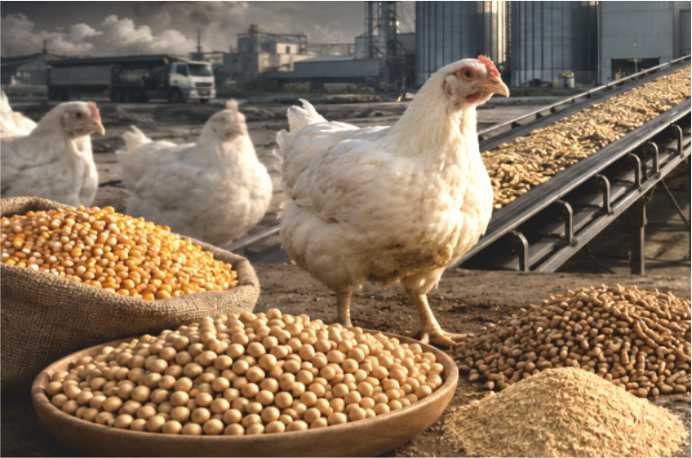
3.FISH MEAL (THE SPECIALITY PROTEIN) : Though used in far smaller amounts (typically for young chicks or breeder birds), fish meal has a complex environmental footprint. The issue of TMA accumulation leading to a fishy flavor in brown-shelled eggs arises from a genetic defect in up to 10% of brown-feathered hens. Normally, TMA is oxidized in the liver into a harmless compound by the action of the enzyme trimethylamine oxidase. The synthesis of this enzyme depends on the expression of the FM03 gene, located on chromosome 8. In the case of anon-synonymous mutation in the FM03 gene (designated T3295),hens cannot oxidize TMA, which then accumulates in the yolk. Poultry diets restrict fish meal to 5-10% of total feed due to ecological inefficiencies. Fishmeal is sourced from small forage fish like anchovies and sardines, which are crucial to the marine food web. Overfishing these species endangers higher trophic levels, leading to decline predatory fish, marine mammals, and seabirds.Moreover, forage fish populations are vulnerable to climate change, causing unstable fishmeal supplies and significant price volatility.India is the third-largest producer and exporter of fishmeal. Fig.1:
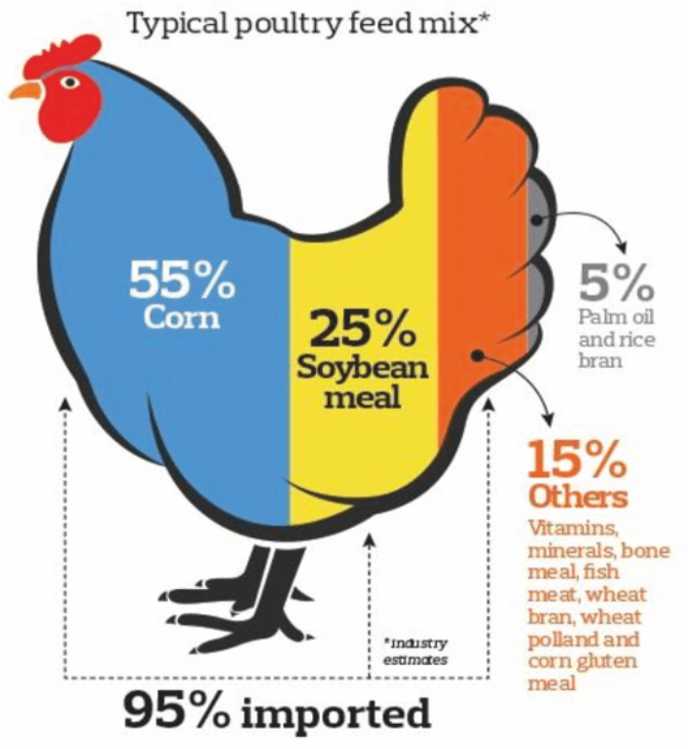
Fig.1: Typical poultry feed mix
ECONOMIC HURDLES TO TRANSITION OF CIRCULAR PROTEINS
The transition to circular proteins, such as microbial biomass, insect meal, or fermented agro-industrial waste, is essential for stabilizing ecosystems and is crucial for a sustainable livestock industry. However, commercial feed mills face significant economic barriers due to scale, commodity pricing, and supply chain maturity, making it challenging to replace traditional soybean meal. Here are the primary economic hurdles commercial mills face today:
THE PRICE PARITY GAP
Decades of agricultural subsidies, optimized supply chains, and massive economies of scale keep their prices relatively low and stable (historically ranging from $600-$750 per ton for soy, and $1,500 to $2,000 for fishmeal). In contrast, alternative proteins like Black Soldier Fly Larvae (BSFL) or microalgae carry immense initial capital expenditures (CapEx) to build high-tech bio-manufacturing or fermentation facilities.
Although insects like Black Soldier Fly Larvae (BSFL) raised on organic waste represent the ultimate circular protein, converting low-value biomass into high-value feed with a minimal land and water footprint. BSFL defatted protein meal and de-oiled powder generally trade between ₹110 and ₹250 per kg in Indian market & wholesale price roughly between $1,320 and $3,000 USD per ton.
SCALE AND VOLUME CONSISTENCY
Commercial feed mills produce feed continuously, requiring tens of thousands of tons of standardized ingredients every single month. Currently, very few alternative protein manufacturers can guarantee that volume without interruption. If a mill alters its highly specific formulation to include 5% insect meal, and the supplier falls short on delivery, the mill has to halt production, re-calibrate its software, and reformulate the diet using different ingredients. This downtime is extraordinarily expensive.
HIDDEN COSTS OF NUTRITIONAL REBALANCING
Soybean meal and fishmeal are highly dependable. Nutritionists have a clear understanding of how these ingredients function within the digestive systems of fish and birds. When a mill uses insect meal or a plant-based alternative to fishmeal, the amino acid profile changes. As a result, the mill needs to purchase additional synthetic amino acids, such as L-methionine or L-lysine, along with specific feed enzymes to compensate for the missing nutrients. This helps maintain the animals’ growth rates. Even if the base alternative protein is priced competitively, these added ingredients increase the overall cost of the final feed formulation.
RETROFITTING MILL INFRASTRUCTURE
Feed mills are designed to handle, grind, and pellet traditional grains and meals. However, alternative ingredients often have very different physical properties. For instance, some insect meals contain significantly more fat than solvent-extracted soybean meal. High levels of lipids can cause blockages in extruders, reduce the quality of feed pellets (making them prone to breaking during transport), and damage machinery. To effectively use these new ingredients at high levels, mills usually need to invest heavily in upgrading their equipment, such as adding new vacuum liquid-coating systems for fats. Many mills are reluctant to make these costly investments due to financial concerns.
REGULATORY APPROVAL COSTS
The global feed industry has strict rules to stop harmful substances from getting into the food chain. To get approval for a new type of protein, like microbial biomass or insect protein, used in animal feed, companies must do many expensive and time-consuming tests. These tests check for safety, look for heavy metals, and measure how well the protein is digested. This process can take many years.The cost of these tests ends up being passed on to the feed producers, which raises the cost of the ingredients. Unless these alternative proteins can be made in large amounts and sold at prices that are as good as soy or wild-caught fish, they are probably only used in special, high-end, or environmentally friendly feed products, not in regular, mass-produced feeds..Fig.2:
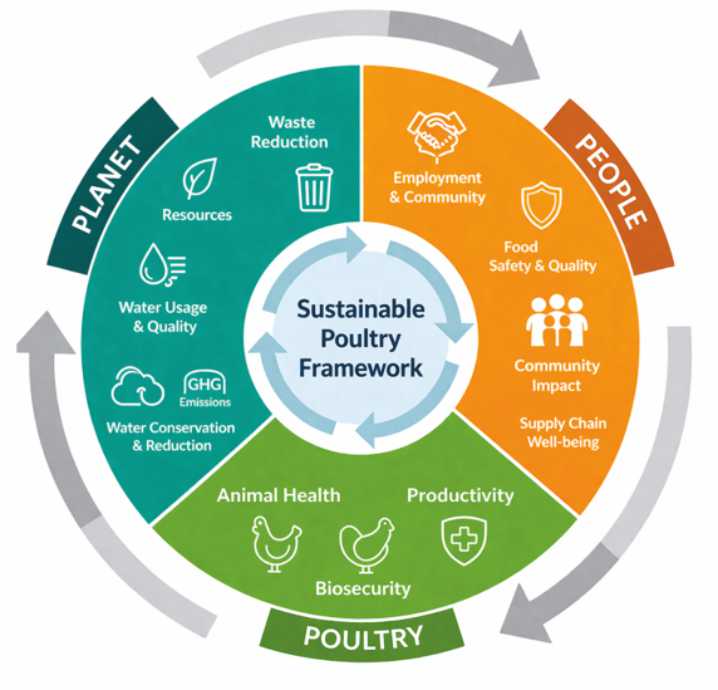
Fig.2: A picture showing how to raise chickens in a way that is good for the environment, people, and the poultry industry. It shows how being efficient with resources, taking care of the chickens’ health and happiness, keeping the farm safe from disease, making sure the chickens are productive, and making the whole food system strong and able to handle challenges are all connected and important.
THE GLOBAL RACE TO DECARBONIZE LIVESTOCK DIET
CIRCULAR INGREDIENTS & CARBON REDUCTION
Upcycling Waste: Using agricultural and slaughterhouse by-products (like DDGS, fruit pomace, and rendered fats) reduces reliance on land-intensive virgin crops and prevents landfill methane. The sustainable use of fruit and vegetable residues (FVRs) in poultry feed formulations has gained considerable attention due to their potential in advancing animal health However, certain challenge such as anti-nutritional factors, palatability issues, and processing techniques are also associated while incorporating these residues into poultry diets. Fermentation technologies create new opportunities to recover nutrients from agricultural residues and improve their value in poultry diets.
Carbon-Optimized Formulation: Modern feed software integrates Life Cycle Assessment (LCA) data to dynamically select ingredients based on their carbon footprint, not just cost and nutrition. LCA is a measurement of the emissions generated during its cultivation, processing, and transport. The software can calculate the exact environmental cost of using raw protein crops (like soy) versus supplementing with synthetic amino acids. It optimizes the diet to prevent protein overfeeding, which simultaneously lowers the feed’s initial GWP (Global Warming Potential) and reduces the nitrogen output (and offensive odors) in the poultry droppings.
THE SHIFT TO DDGS (DISTILLERS DRIED GRAINS WITH SOLUBLES)
Cost Advantage: Maize-based DDGS (₹17-₹20/kg) is significantly cheaper than soymeal (~₹40/kg), driving rapid adoption in the poultry industry.
Substitution Limits: DDGS can replace 25-30% of maize demand. Insect protein and algae can replace small portions of soy (5-10%).
Ongoing Conventional Reliance: Despite these alternatives, conventional ingredients will still make up 60-70% of overall feed requirements.
PRECISION NUTRITION
Targeted Diets: Formulating feed to match exact amino acid and energy needs improves the Feed Conversion Ratio (FCR).
Lower Emissions: Preventing protein overfeeding reduces nitrogen in manure, which directly lowers harmful nitrous oxide (N₂O) emissions downstream. Fig.3
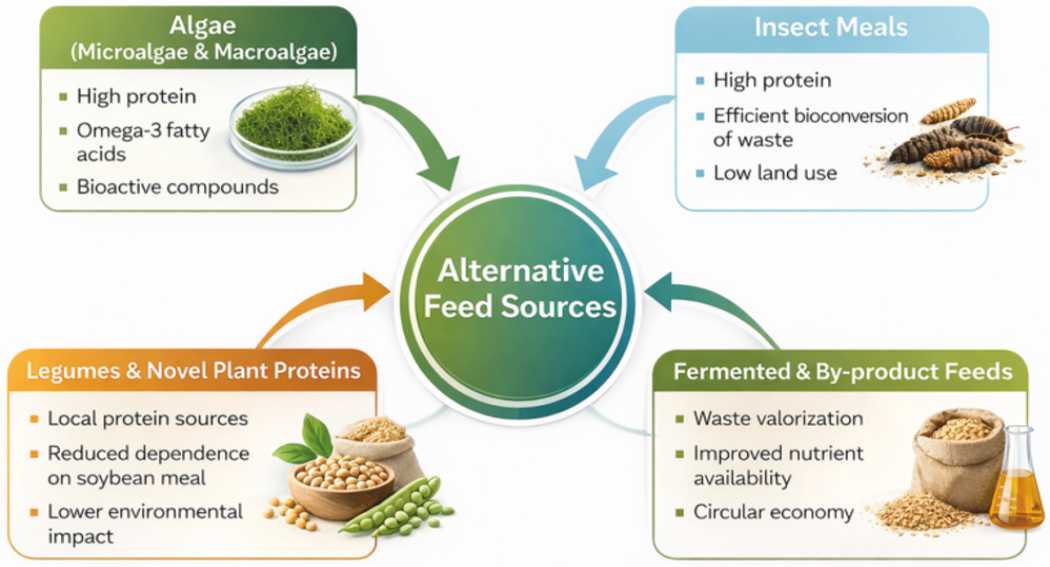
Fig.3: Alternative protein sources for animal feed in a circular bioeconomy could include things like leftover materials from farming and food processing, meals made from insects and worms, leftovers from biorefineries, proteins made by microbes, and by-products from aquatic sources.
BETWEEN REALITY AND RHETORIC: LOW-CARBON POULTRY FEED
Moving from using a wide variety of ingredients in poultry feed to providing exactly what the birds need at each stage of growth is key to creating real low-carbon feed. While some talk about replacing soy with new ingredients, the actual science is about making tiny, precise changes. It’s about giving birds exactly the right nutrients they need, in the right amounts, so nothing is wasted. Real reductions in carbon emissions from poultry feed don’t come from using popular or fashionable ingredients. They come from making sure every part of the feed works as efficiently as possible. Ensuring every gram of feed is used well is the best way a farm can help the environment. Instead of providing too much crude protein, experts can use specific synthetic amino acids like L-Methionine, L-Lysine, and L-Threonine.This helps reduce the total amount of crude protein in the birds’ diets. By cutting crude protein by just 1.5%, farms can lower their carbon footprint by about 70 kg of CO₂ equivalent per ton.
CONCLUSION
Despite having significant potential, incorporating insects, algae, fermented products, and agricultural and industrial by-products into chicken feed continues to face multiple challenges. These challenges include scientific, technical, economic, and legal difficulties. For insects, key issues include variability in their nutritional content based on their diet, high chitin content that complicates protein digestion for chickens, higher production costs compared to traditional protein sources, and the absence of established international safety and quality standards. Consumer acceptance of chicken products derived from insect-based diets remains uncertain, which may hinder large-scale adoption. The effort to reduce the carbon footprint in chicken feed presents a mix of real benefits and exaggerated claims. While some measurable progress is achievable, the extent and impact of these improvements often fall short of what companies assert. Reducing the carbon footprint in chicken feed is neither a complete solution nor a total myth; it represents incremental steps within a broader system that is not sustainable. The true advantages come from the following areas:
– Integrating a circular bioeconomy into feed production
– Minimizing reliance on imported protein
– Utilizing waste materials effectively
– Developing better alternative ingredients
The industry must shift from making grand promises to achieving tangible improvements. This involves recognizing and celebrating small achievements, such as 5-10% reductions, while also being honest about limitations and working towards broader changes that extend beyond mere feed modifications. This conclusion reflects both the actual progress being made and the gap between marketing claims and real-world outcomes, offering a balanced assessment of the industry’s current position regarding sustainable feed promises. Hybrid feeding systems that combine commercial and alternative feed sources generally provide the most consistent results, although maintaining mineral balance is essential during the laying phase.
REFERENCES
1.Vincent Guyonnet (2025) : Chapter 2 World Egg Production and Marketing Trends, In book: Handbook of egg science and technology (pp.9-26) Publisher: CRC Press. DOI:10.1201/9781003254430-3.
2.Hairui Yu et al (2025): Sustainable poultry farming: mitigation of greenhouse gas emissions in poultry farming through nutritional and environmental modulations. World’s Poultry Science JournalVolume 81, 2025 – Issue 4: Pages 1081-1141.
3.Dheeraj Kumar et al (2025): Alternative feed ingredients in poultry diets: A review of nutritional potential, processing technologies, and challenges. International Journal of Veterinary Sciences and Animal Husbandry 2025; SP-10(9): 16-19.
4.Yadi Oktariansyah*& Mustafa Kamal (2026): Alternative Feed Use in Poultry Chickens: Impacts on Feed Efficiency and Physiological Parameters—A Systematic Literature Review. Journal of Natural Sciences ISSN 2721-5571 (Online) Vol.7, No.1 March 2026: 41-53.