

Balancing Air Quality in Poultry Houses: Tackling Ammonia and Humidity for Health and Productivity
Dr. Pawar Rutik Namdev1 (MVSc Scholar), Dr. Shipra Tiwari1 (MVSc Scholar),
Dr. Mahendra Kumar Patel1 (Ph.D Scholar)
1College of Veterinary Science and Animal Husbandry, DUVASU Mathura (281001), India
Abstract
The environment within poultry houses plays a decisive role in the overall health, performance, and welfare of birds. Among various factors, the concentration of ammonia (NH₃) and the level of relative humidity (RH) are the most critical. Ammonia, released from the microbial breakdown of waste, and excessive humidity, which influences litter moisture, often work together to create poor air quality. This review highlights how these two factors are produced, their combined impact on broilers and layers, and outlines practical approaches for monitoring and management to maintain profitability and bird well-being.
1. Introduction
For poultry farmers, achieving optimal productivity requires not just good feed and genetics, but also maintaining a favorable environment inside the house. Air quality, ventilation, and litter condition all directly affect flock health. Ammonia gas and humidity levels are particularly important, as they can significantly influence bird growth, egg production, immune strength, and overall welfare. Excessive ammonia harms the respiratory tract, reduces feed intake, and lowers growth efficiency, while uncontrolled humidity leads to wet litter, higher ammonia emissions, and disease outbreaks. To ensure healthy flocks, ammonia should ideally be kept below 20–25 ppm and RH within 50–70%.
2. How Ammonia and Humidity Build Up
2.1 Generation of Ammonia
Ammonia is created naturally when uric acid in droppings is decomposed by bacteria. The process is intensified under warm, moist, and alkaline conditions. The type of litter material, stocking density, feed composition (especially protein levels), and frequency of manure removal all influence ammonia levels. Houses with poor cleaning routines or high moisture accumulation often experience higher NH₃ concentrations.
2.2 Role of Humidity
Humidity directly controls litter moisture content. High RH slows the evaporation of water from bedding, resulting in wet litter that promotes microbial activity and ammonia release. Conversely, very low RH increases dust particles in the air, which irritates the birds’ airways. Thus, moisture management is closely tied to controlling ammonia levels.
3. Impacts on Bird Health and Physiology
3.1 Respiratory Effects
Ammonia acts as a strong irritant to the respiratory tract. Continuous exposure damages the trachea and air sacs, reducing the ability of cilia to filter pathogens. Birds exposed to more than 20–25 ppm are more prone to respiratory diseases such as Newcastle, bronchitis, and Mycoplasma infections. Vaccination responses also tend to decline.
3.2 Eye and Skin Irritation
Chronic exposure to ammonia causes conjunctivitis, watery eyes, and corneal damage. High RH contributes to wet litter that leads to footpad dermatitis, hock burns, and breast blisters—all of which compromise welfare and reduce carcass quality at processing.
3.3 Growth and Feed Efficiency
High levels of ammonia reduce appetite, slow weight gain, and impair feed conversion. Even a small increase in feed conversion ratio (FCR) significantly raises production costs, especially in large flocks. Performance losses become severe when ammonia concentrations exceed 50 ppm for prolonged periods.
3.4 Immunity
Birds raised in poor air quality often show weaker immune responses. Prolonged exposure to ammonia not only stresses birds but also reduces antibody production after vaccination, leaving them vulnerable to disease outbreaks.
3.5 Egg Production
In layer flocks, poor litter conditions and elevated ammonia cause stress, leading to reduced laying rates, smaller egg size, and poor shell quality. Mortality may also rise due to an increased risk of secondary infections.
4. The Combined Impact of Ammonia and Humidity
Although ammonia and humidity can each harm poultry, their combination is especially damaging. High RH makes litter wetter, which in turn boosts ammonia emissions. Humid air also traps ammonia at bird level, ensuring birds inhale more of it. Together, these conditions encourage respiratory infections, coccidiosis outbreaks, poor weight gain, higher mortality, and overall production losses.
5. Monitoring Levels
5.1 Threshold Values
Ammonia: Should remain below 20–25 ppm (ideally closer to 10 ppm). Birds show signs of irritation even at levels humans may not detect by smell.
Relative Humidity: Best maintained between 50–70%. RH above 75% promotes wet litter, while RH below 40% leads to dust and dehydration.
5.2 Measurement Tools
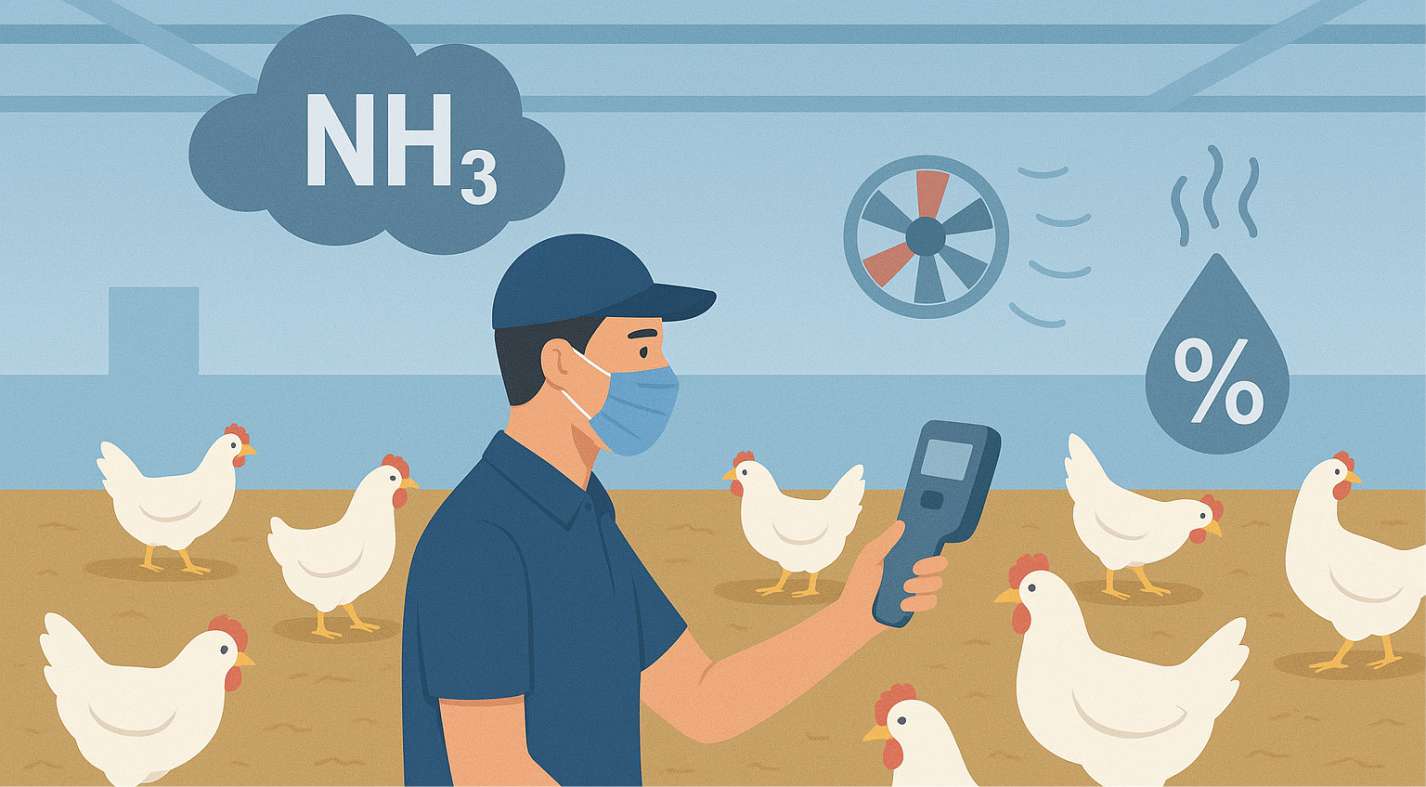
Ammonia: Can be monitored using portable gas detectors, color tubes, or continuous electronic sensors.
Humidity: Inexpensive hygrometers placed at bird height provide reliable readings and are often integrated into automatic ventilation systems.
6. Strategies for Control
6.1 Ventilation
Proper ventilation ensures air exchange, dilutes gases, and removes excess moisture.
In cold weather: minimum ventilation prevents humidity build-up without chilling the birds. fans and circulation systems increase air movement and reduce heat stress.
6.2 Litter Management
Maintaining dry litter is essential. Turning litter, replacing wet spots, using absorbent bedding materials, and preventing drinker leaks are key practices. Chemical litter amendments such as alum or sodium bisulfate can reduce pH, minimizing ammonia release.
6.3 Nutrition
Adjusting feed formulations to match amino acid requirements reduces nitrogen excretion. Enzyme supplements and probiotics may also improve digestion and reduce ammonia in manure.
6.4 Housing Design
Well-insulated poultry houses with good drainage and properly installed nipple drinkers minimize litter moisture. Preventing condensation on walls and ceilings also helps keep humidity under control.
6.5 Advanced Methods
Technologies like air scrubbers, biofilters, or controlled ozone applications are being tested for large commercial units. Automated environmental control systems that integrate NH₃ and RH sensors with fans and heaters are becoming increasingly popular.
7. Economic Importance
Poor air quality silently eats into farm profits. Lower feed efficiency, reduced weight gain, carcass downgrades, increased mortality, and higher veterinary costs all add up to significant economic losses. Studies show that ammonia-related performance drops can cost large poultry complexes thousands of dollars weekly. Investing in better litter management, ventilation, and nutritional adjustments often proves cost-effective in the long run.
8. Evidence and Case Studies
Field surveys often reveal ammonia exceeding safe levels during winter when ventilation is minimized, leading to higher respiratory issues and welfare concerns. Controlled trials consistently show that birds exposed to even moderate ammonia (20–30 ppm) suffer from lower growth rates, poorer immune response, and more lesions compared to those raised under optimal conditions. Interventions such as litter acidifiers, improved diet formulations, and enhanced ventilation schedules have been shown to significantly reduce ammonia emissions and improve performance.
9. Recommendations for Farmers
– Check RH daily: maintain between 50–70%.
– Monitor ammonia regularly: aim for <20 ppm.
– Fix water leaks immediately to avoid wet litter.
– Adjust ventilation by season to balance temperature, RH, and air quality.
– Work with a nutritionist to optimize protein levels in diets.
– Use litter amendments wisely to reduce ammonia emissions.
10. Future Outlook
The integration of smart sensors and artificial intelligence into poultry housing systems may soon allow farmers to predict ammonia build-up and adjust ventilation automatically. Further research is needed to quantify the long-term welfare and production benefits of advanced technologies and to make them affordable for small- and medium-scale farmers.
11. Conclusion
Ammonia and humidity are closely linked environmental challenges in poultry houses. Both negatively affect bird health, welfare, and productivity when not controlled. Together, they magnify each other’s harmful effects, resulting in economic losses and compromised flock performance. Regular monitoring, proactive litter and ventilation management, balanced nutrition, and modern environmental control tools are essential for maintaining a healthy environment. Addressing these issues not only supports profitability but also improves animal welfare, ensuring sustainable poultry production.