

Abstract
Smart poultry farming integrates information and communication technologies (ICT), automation, sensor networks, and data analytics into conventional poultry production systems to improve efficiency, animal welfare, biosecurity, and sustainability. In the context of India in 2026, smart poultry farming represents a pathway for industry transformation amidst rising demand for poultry products, labour shortages, climate change risks, and the need to reduce environmental footprint. This paper examines drivers, technologies, implementation frameworks, economic viability, and policy dimensions critical for success in smart poultry farming across India. It synthesizes empirical evidence and emerging best practices to present an actionable roadmap for stakeholders including farmers, agri-tech firms, extension agencies, and policymakers.
1. Introduction
1.1 Background
Poultry farming in India has been one of the fastest-growing segments of the livestock sector over the past two decades. Driven by rising incomes, urbanization, changing dietary preferences, and government support for allied agriculture, India’s poultry industry contributes significantly to rural employment and national nutrition security. According to the Department of Animal Husbandry & Dairying, poultry contributes nearly 1.5% to India’s Gross Value Added (GVA) in agriculture and is a major source of animal protein for over 1.4 billion people.
Despite progress, conventional production systems face structural challenges: inefficient feed conversion ratios, disease outbreaks (e.g., avian influenza), labor constraints, climate stressors, waste management issues, and volatile input costs. These constraints are amplified in small and medium farms that dominate the Indian poultry landscape—with over 80% of farms being smallholders having fewer than 1000 birds (FAO, 2023).
1.2 Need for Smart Poultry Farming
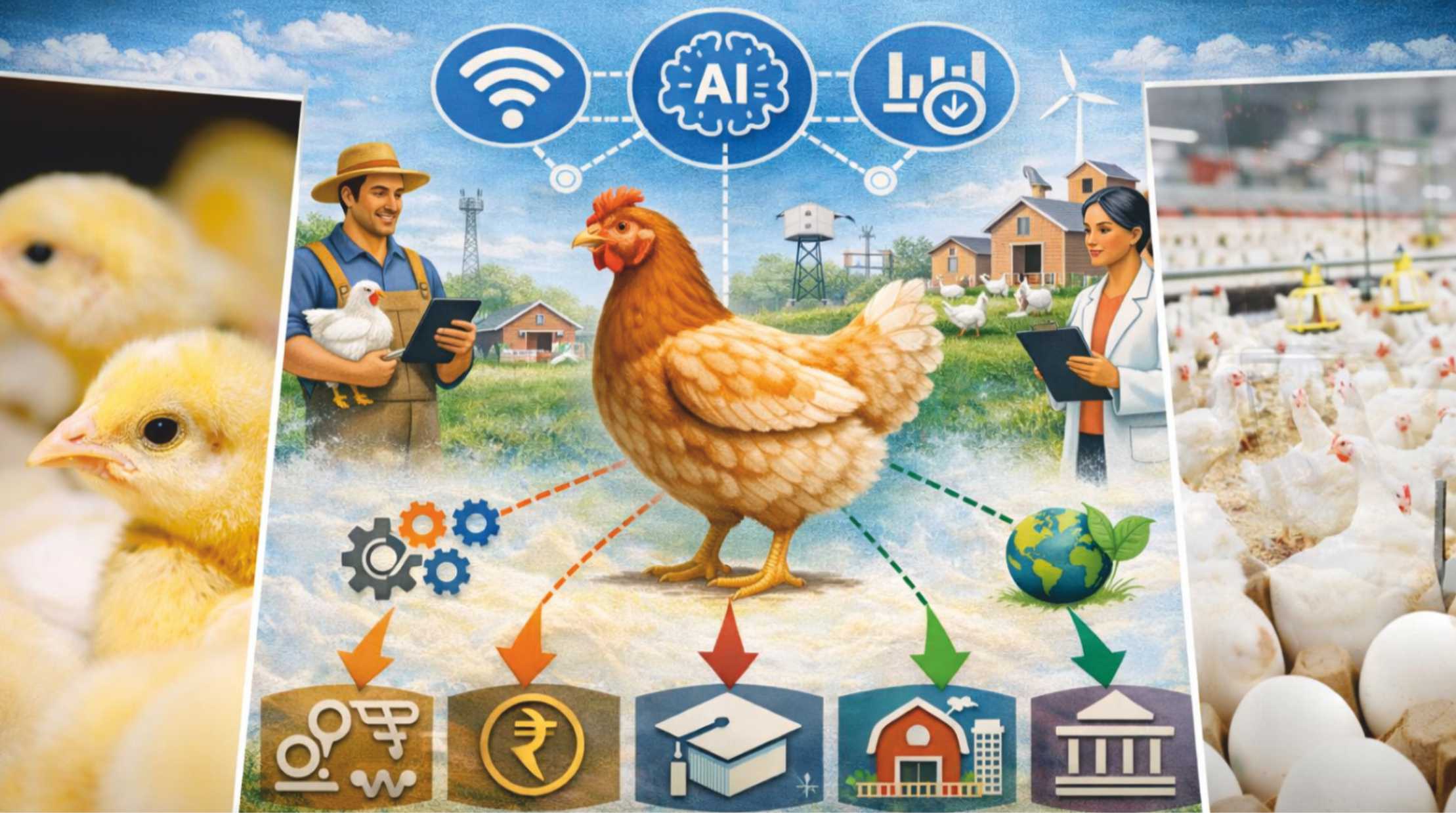
Smart poultry farming leverages digital technologies to enable real-time monitoring, automation of routine tasks, predictive analytics for health and production, and optimization of resource inputs. As per recent FAO and ICAR reports, smart systems can increase productivity by 15–25%, reduce mortality, enhance biosecurity, and improve profit margins (FAO, 2024; ICAR, 2025). The integration of Internet of Things (IoT), Artificial Intelligence (AI), robotics, and cloud computing creates data-driven decision support that is especially relevant in the Indian context, where efficiency gains can directly translate to improved competitiveness, reduced cost of production, and heightened resilience.
2. Smart Poultry Farming: Conceptual Framework
2.1 Definition
Smart poultry farming refers to a production system augmented with digital and automated technologies to enhance operational efficiency, animal welfare, environmental control, and supply chain integration. It encompasses:
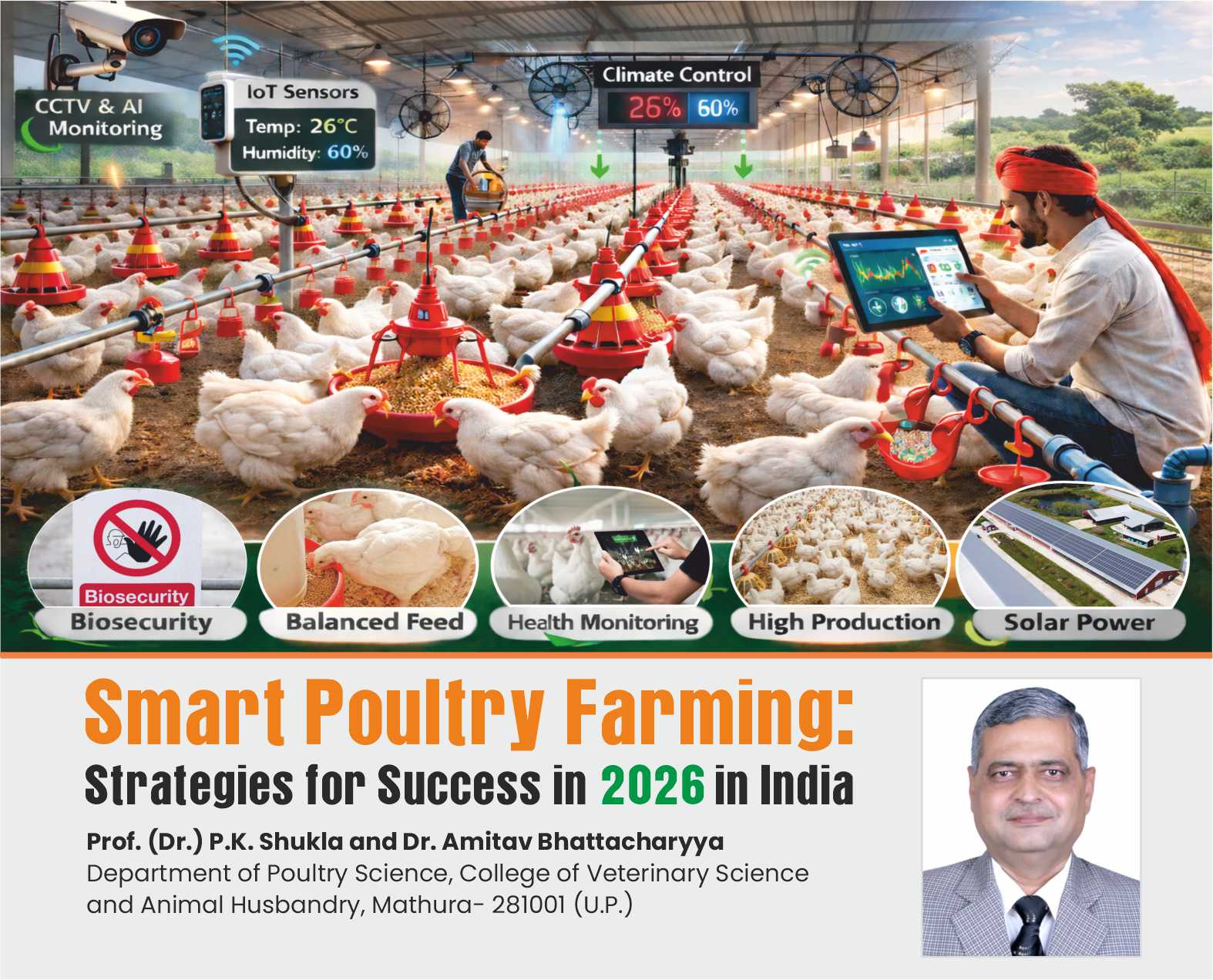
1. Sensors & IoT Devices: For monitoring temperature, humidity, gas concentrations (NH3, CO2), feed/water intake, and bird behavior.
2. Automation: Including automated feeders, drinkers, lighting systems, egg collection, and climate control systems.
3. Data Analytics & AI: For predictive modeling, disease detection, yield forecasting, and optimization.
4. Connectivity & Cloud Platforms: Centralized dashboards accessible via smartphones/PCs.
5. Biosecurity & Traceability Tools: RFID tagging, blockchain for supply chain transparency.
2.2 Core Components
2.2.1 Environmental Monitoring
Maintaining optimal ambient conditions is vital for poultry health. IoT sensors continuously measure environmental variables, enabling automated adjustments via actuators (fans, heaters, evaporative pads), ensuring thermal comfort, and reducing heat stress—particularly significant in tropical climates like India.
2.2.2 Precision Feeding and Watering
Automated feeders and drinkers deliver nutrients and water tailored to the growth stage of birds, cutting feed wastage and improving feed conversion ratios (FCR). Integrated weight sensors and consumption analytics guide ration adjustments.
2.2.3 Health and Behaviour Monitoring
Computer vision and wearable sensors can detect abnormal behaviour, gait disorders, or early disease indicators. AI models analyse patterns to alert farmers before clinical signs become severe.
2.2.4 Integration with Supply Chain
Smart systems link production data with logistics, processing, and retail, enabling traceability, quality assurance, and consumer confidence. Blockchain applications can authenticate product provenance, crucial for exports and premium markets.
3. Drivers of Adoption in India
3.1 Market Demand and Consumer Preferences
India’s poultry market is forecasted to grow at 8–10% CAGR through the 2020s, driven by rising protein consumption, especially among urban and middle-class populations. Preferences for quality, food safety, and traceability create incentives for smart traceable production systems.
3.2 Policy and Institutional Support
The Government of India’s initiatives such as the National Livestock Mission (NLM) and Digital Agriculture Mission promote technology adoption, capacity building, and digital extension services for livestock and poultry sectors. Subsidies and credit schemes under NABARD also facilitate investment in automation and infrastructure.
3.3 Labor Dynamics
Rural labour migration to urban centres and rising wage costs make labour-saving technologies increasingly attractive. Smart systems reduce dependency on manual monitoring and operation.
3.4 Climate Change and Biosecurity Risks
Heat stress in poultry dramatically affects feed intake and mortality. Smart climate control systems mitigate heat stress and improve resilience. Additionally, enhanced monitoring systems strengthen biosecurity, crucial for managing outbreaks like avian influenza.
4. Technologies in Smart Poultry Farming
4.1 Internet of Things (IoT) and Sensor Networks
IoT platforms leverage interconnected sensors to collect real-time data on environmental and bird parameters. Key IoT applications include:
– Temperature and humidity sensors.
– VOC and ammonia gas sensors.
– Light intensity monitors.
– Water flow and feed silo level sensors.
– Weight scales embedded in feeders.
These devices communicate via wireless protocols (LoRaWAN, Wi-Fi, NB-IoT) to local gateways, and subsequently to cloud platforms where data storage and analytics occur.
4.2 Artificial Intelligence and Data Analytics
Machine learning algorithms analyse historical and real-time data to:
– Predict growth performance.
– Detect anomalies indicating disease or stress.
– Optimize feeding regimens.
– Forecast production cycles.
AI applications often integrate computer vision through cameras that analyse bird activity, feeding behaviour, and flock distribution patterns.
4.3 Automation and Robotics
Automated systems reduce manual intervention:
– Automated Feeding & Watering: Controlled dispensing ensures precision.
– Climate Control: Fans, coolers, heaters regulated in response to sensor feedback.
– Robotic Egg Collection: Reduces labour, improves hygiene.
– Automated Waste Removal: Enhances cleanliness and reduces ammonia buildup.
4.4 Blockchain and Traceability Platforms
Blockchain enables secure, immutable recording of production data across the supply chain. For eggs and meat, traceability enhances quality assurance, regulatory compliance, and export readiness. Buyers can trace product history from hatchery to retail.
4.5 Mobile and Cloud Interfaces
Smartphone apps and web dashboards provide farmers with real-time alerts, analytics, and control functions. Cloud integration ensures data accessibility from anywhere, enabling remote management.
5. Economic Analysis and ROI
5.1 Cost Structure in Smart Poultry Systems
Initial investment in smart technologies includes:
– Hardware (sensors, controllers, cameras).
– Software subscriptions (cloud dashboards, analytics platforms).
– Installation and integration costs.
– Training and capacity building.
Operating expenses include internet connectivity, maintenance, and occasional sensor calibration.
5.2 Benefits and Return on Investment (ROI)
Empirical studies indicate:
– Feed Savings: Precision feeding can reduce feed costs by 5–10%, which is significant given feed accounts for ~65–70% of total production cost.
– Mortality Reduction: Early disease detection systems can reduce mortality by 10–15%.
– Labor Savings: Automation can reduce labour hours by 20–30%.
– Improved FCR: Better environmental control improves FCR ratios, enhancing weight gain efficiency.
Simulation models show payback periods of 18–36 months for integrated smart systems under typical Indian conditions, depending on scale and technology intensity.
6. Implementation Pathways in India
6.1 Segmentation by Farm Size
6.1.1 Smallholder Farms (≤ 1000 birds)
Challenges for smallholders include capital constraints and limited technical expertise. Adoption strategies include:
– Modular Systems: Low-cost sensor packages (temperature, humidity) with basic automation.
– Shared Services: Community-level data hubs and shared equipment.
– Leasing and Pay-per-Use Models: Agritech firms can offer technology as a service (TaaS).
6.1.2 Medium and Large Farms
Larger farms can invest in comprehensive systems with AI analytics, robotics, and full automation. Dedicated farm managers with digital training are critical for maximizing benefits.
6.2 Financing Mechanisms
-Farm Credit: Low-interest loans from cooperative banks or NABARD.
– Government Subsidies: Under NLM and State Animal Husbandry departments for digitization.
– Public–Private Partnerships (PPP): Government and private firms co-invest in demonstration farms and training centres.
6.3 Capacity Building and Extension Services
Training programs must focus on:
– Operation and interpretation of sensor data.
– Basic troubleshooting of automated systems.
– Biosecurity protocols and digital record keeping.
Agricultural universities and Krishi Vigyan Kendras (KVKs) can be pivotal in upskilling farmers.
6.4 Data Governance and Security
Standard protocols for data ownership, privacy, and interoperability are needed. Data-sharing frameworks must protect farmer interests while enabling analytics.
7. Case Studies and Empirical Evidence
7.1 Example 1: Precision Climate Control in Broiler Farms
In a southern India broiler operation, integration of IoT climate sensors with automated fans and coolers resulted in:
– 12% reduction in mortality.
– 7% improvement in average daily gain (ADG).
– 3% feed cost savings.
Machine learning models predicted periods of heat stress, allowing pre-emptive cooling adjustments.
7.2 Example 2: Computer Vision for Early Disease Detection
An agritech startup deployed computer vision cameras in layer farms to monitor bird activity. Alerts based on deviations in movement patterns enabled early intervention, reducing disease spread and culling by 15%.
7.3 Example 3: Blockchain for Egg Traceability
A cooperative of 50 layer farms used a blockchain platform to record production batches. Retail partners reported increased consumer trust due to visible traceability, allowing premium pricing of 5–8%.
8. Challenges and Risks
8.1 Infrastructure Constraints
Rural connectivity remains uneven; reliable internet and power supply are prerequisites for smart systems. Government programs like Bharat Net can improve broadband access in rural farming regions.
8.2 Knowledge Barriers
Many farmers lack digital literacy, making adoption slow. Tailored training and simplified user interfaces are essential.
8.3 High Capital Costs
Despite declining sensor costs, upfront investments remain significant, especially for advanced systems.
8.4 Data Management Concerns
Cloud dependency poses cybersecurity risks. Protocols for data ownership and protection are needed.
8.5 Cultural and Behavioral Barriers
Resistance to change and preference for traditional practices can slow technology adoption.
9. Sustainability and Environmental Impact
9.1 Reduction in Resource Use
Smart systems optimize feed and water, reducing waste. Improved climate control minimizes energy use.
9.2 Waste Management
Sensors help manage litter moisture and ammonia levels, contributing to better manure management and reduced greenhouse gas emissions.
9.3 Welfare and Ethical Production
Continuous monitoring improves bird welfare by preventing heat stress, overcrowding, and unmanaged disease progression.
10. Policy Recommendations
10.1 Supportive Frameworks and Incentives
– Subsidies for digital agriculture adoption in poultry.
– Financing schemes targeting smallholder integration.
– Standards and certification for smart poultry systems.
10.2 Public–Private Collaboration
– Pilots and demonstration farms to showcase ROI.
– Joint R&D for India-specific technology solutions.
10.3 Regulatory and Data Policies
– Clear guidelines on data privacy for farm data.
– Open data standards for interoperability of devices.
10.4 Research and Innovation Funding
Grants for AI models tailored to Indian poultry phenotypes, climate conditions, and feed regimes.
11. Conclusion
Smart poultry farming represents a transformative opportunity for the Indian poultry sector in 2026 and beyond. By integrating IoT, AI, automation, and data analytics, producers can significantly enhance efficiency, health management, and sustainability. However, realizing these benefits at scale requires cohesive strategies encompassing technology deployment, financing, capacity building, infrastructure development, and supportive policy ecosystems.
The transition to smart poultry farming is not merely technological—it is structural, involving shifts in business models, skills, and market systems. With targeted investments and collaboration among stakeholders, India’s poultry sector can harness smart farming to meet rising demand, improve competitiveness, and contribute to sustainable rural livelihoods.