

Introduction
The poultry sector is a critical part of the livestock industry, encompassing various production levels such as breeding farms, hatcheries, feed factories, broiler and layer farms, and processing plants. It includes different species like chicken, quail, duck, turkey, guinea fowl, and goose. The infrastructure ranges from basic hatched sheds to automated, environmentally controlled ones, featuring automatic feeders, advanced watering systems, automatic egg collection, refrigeration systems, and units for manufacturing nutraceuticals, medicines, vaccines, mechanical components, and electronic gadgets. Poultry feed manufacturing involves processing different raw materials to meet the nutritional needs of birds, drawing on expertise in animal nutrition and mechanical engineering. Since the introduction of feed mills, numerous technologies have been employed to implement diverse feed manufacturing techniques. These technologies aim to produce well-balanced, cost-effective, and high-quality feed sustainably. Over the years, various technological innovations have further enhanced the environmental, social, and economic sustainability of feed manufacturing vaccine quality control, standardization and quality control of poultry feed, eggs, and meat, HACCP (Hazard Analysis and Critical Control Point) and GMP (Good Manufacturing Practices) compliance with WTO and CODEX norms, and efforts in grading, value addition, brand promotion, and export enhancement.
Globally, by the end of this decade, poultry meat is expected to account for 41% of all protein from meat sources, according to the OECD-FAO Agricultural Outlook 2030. The Indian poultry industry stands to gain from lifestyle and dietary changes, with the share of organized commercial farms increasing due to modernization and technical improvements. Government data shows a steady rise in egg production, from 95 billion in 2017-18 to 105 billion the following year, and 114 billion in 2019-20.
Similarly, poultry meat production grew from 3.7 million metric tons (mmt) in 2017-18 to 4.1 mmt the following year, reaching 4.3 mmt in 2019-20. Projections suggest that by 2023, the country could produce 136 billion eggs and 6.2 mmt of poultry meat.
The global poultry market was valued at nearly $319.2 billion in 2019, having grown at a CAGR of 5.5% since 2015, and is expected to grow at a CAGR of 6.1% to nearly $405 billion by 2023. The market is projected to grow at a CAGR of 7.2% to nearly $465.7 billion by 2025 and at a CAGR of 6.8% to $645.7 billion by 2030.
New Trends in Poultry Farming:
The COVID-19 pandemic, declared by the WHO on March 11, 2020, severely impacted many economic sectors, including livestock production. It led to production and transportation disruptions, declining consumer demand, and volatile markets, causing financial difficulties and permanent closures of many farms. Social distancing, self-isolation, and travel restrictions reduced the workforce across sectors, leading to job losses. The need for medical supplies increased, while the need for commodities and manufactured products decreased. The food sector faced increased demand due to panic-buying and stockpiling. Labor management issues prompted innovative ideas in poultry farming. Despite the challenges, new technologies offer solutions for future success.
Emerging trends in poultry farming include:
1. Genetic solutions for preventing male chicks.
2. 3D cameras for capturing precise broiler weights.
3. MRI technology for identifying fertile eggs.
4. Smartwatches for solving labor problems in poultry processing.
5. 24/7 feedback loops for improving poultry flock outcomes.
6. Collaborative robots for further automation.
7. Improved in-line poultry chilling using kinematics.
8. Preventing antibiotic resistance using peptides.
9. Digital technologies for simplifying poultry data analysis.
10. Hyperspectral imaging for detecting poultry meat defects.
11. Machine vision for detecting broiler floor distribution.
12. CRISPR technology for transforming the poultry industry.
13. Robots for meeting processing challenges.
14. Automation for preparing case-ready poultry.
15. Digitalization for optimizing productivity planning.
16. Healthy chicks establishing adult microbiomes quickly.
Technologies disrupting future production and processing operations:
1. Remote sensing allows real-time visibility of poultry house conditions, bird performance, health, and welfare. Farmers can monitor sheds and birds via computer, with sensors providing alerts if parameters deviate from requirements.
2. Sensors streamline data collection for birds and workers, enabling precision poultry production. Smart phones can monitor real-time environmental contexts like temperature, humidity, ammonia levels, and water levels. Integrated solutions using WSN (wireless sensor network) and GPRS networks facilitate smart poultry monitoring.
3. Sensors help estimate body weights, measure flock uniformity, and solve labor issues. Wearable sensors improve worker retention and food safety.
Feed ingredients for poultry
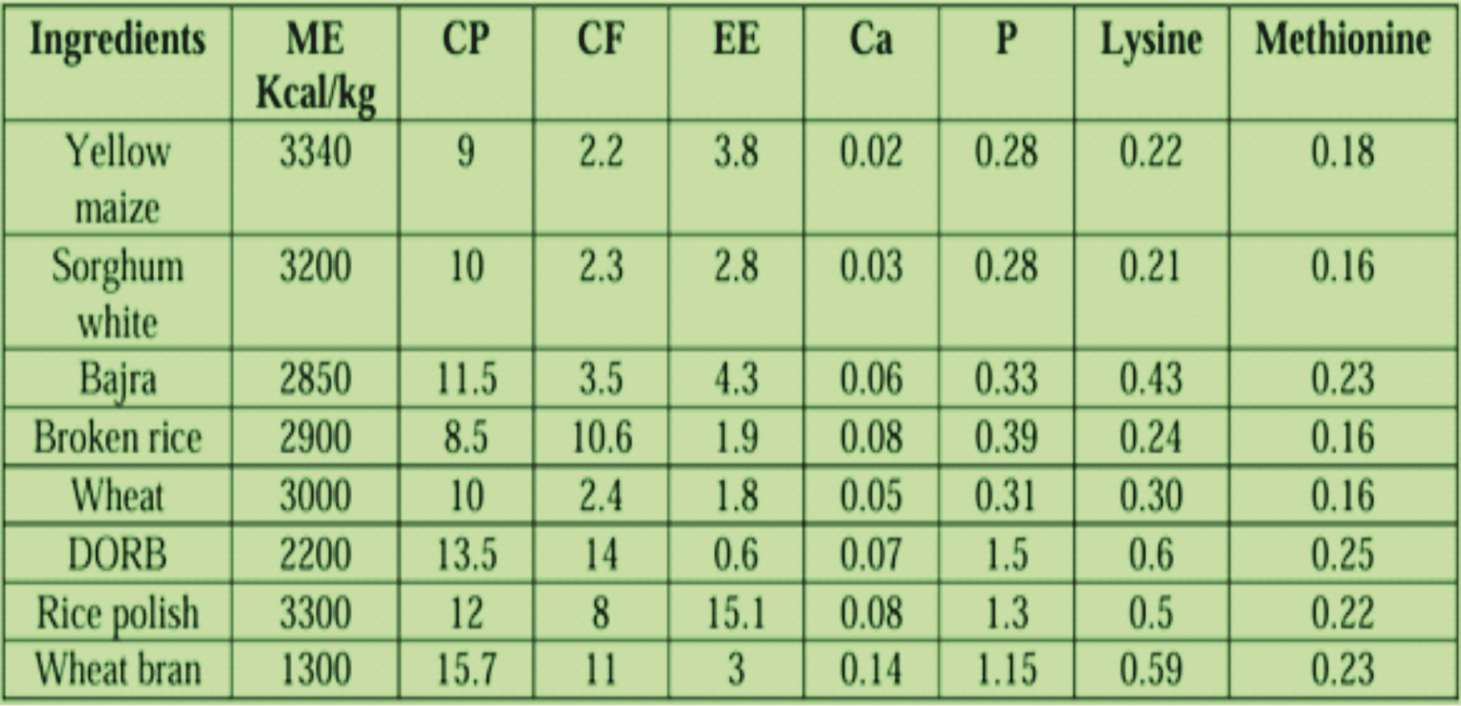
Cereal grains and their by-products:
1. Dry matter: Dry matter of cereal grains should be 90%.
2. Proteins: Crude protein content of grains range from 8-12%. Cereal proteins are deficient in certain indispensable amino acids particularly lysine and methionine. 3. Lipids: Wheat, barley, rye, rice contain 1-3% lipids. Lipid content is highest in oat (46%) and lowest in wheat (1-2%).Cereal oils are unsaturated fatty acids main acids being lenoleic and oleic.
4. Crude fibre: Highest amount of crude fibre is present in oats and rice which contain a husk or hull. Crude fibre is lowest in naked grains, wheat and maize.
5. Starch: Cereal starch occurs in the endosperm of the grain in the form of granules. Cereal starches consist of 25% amylose and 75% amylopectine,
6. Minerals: All grains are deficient in Ca (0.1% or less) and P (0.3-0.5%) but part of this is present as phytic acid which is concentrated in the aleurone layer. Cereal phytates bind with Ca and probably Mg, thus preventing their absorption.
7. Vitamins: Cereal grains are deficient in vitamin A. With exception of yellow maize having good amount of vitamin A as carotene, Grains are good source of vitamin E and vitamin B1, but low content of vitamin B2.
Plant-Origin Oil Cakes and Meals:
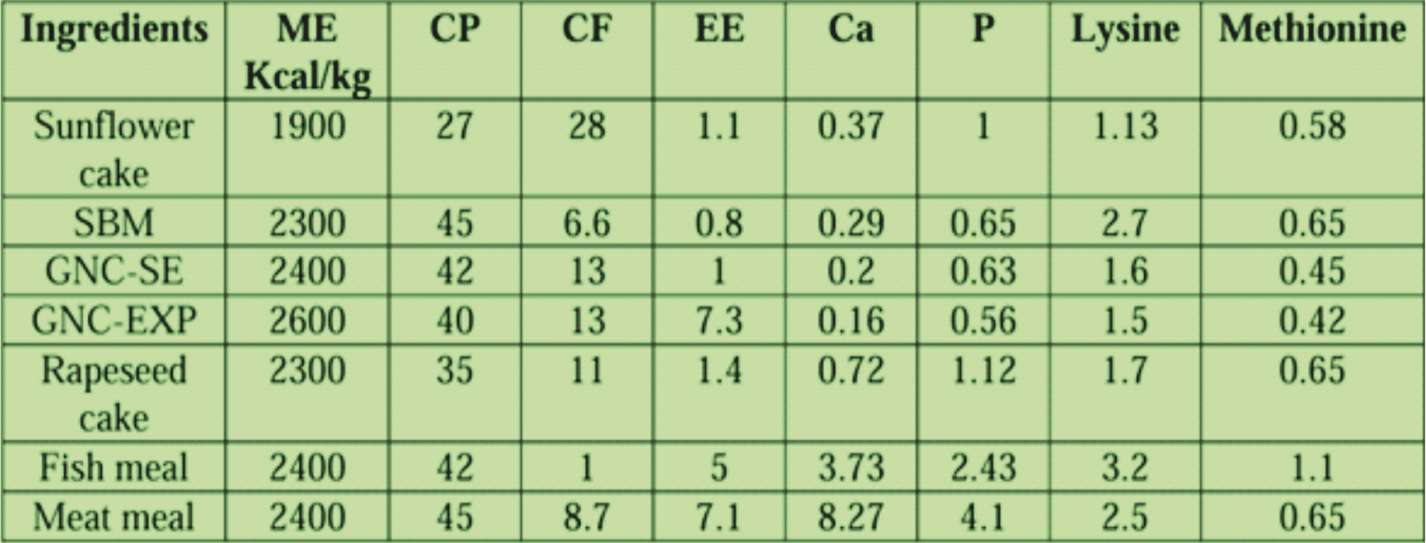
1. Groundnut Cake (GNC):
o Composition: Contains 35-60% oil and 25-30% crude protein.
o Protein Content: In expeller varieties, crude protein (CP) is around 45% with 10% fat.
o Amino Acid Profile: Excellent source of arginine but deficient in lysine, methionine, and cystine. Lysine is the first limiting amino acid.
o Mineral Content: Poor in calcium (Ca) and phosphorus (P).
o Toxic Factor: Contains aflatoxins from Aspergillus flavus, especially in warm, rainy seasons. It tends to become rancid in warm, moist climates and should not be stored longer than 6 weeks in summer or 3-4 months in winter. Ducklings are particularly susceptible.
2. Soybean Meal (SBM):
o Oil Content: Solvent-extracted SBM has about 1% oil.
o Protein Content: SBM is a high-quality protein source with a CP of 44% to 49%.
o Amino Acid Profile: Contains all essential amino acids but has sub-optimal concentrations of cystine and methionine. Lysine is abundant, while methionine is the first limiting amino acid.
o Usage: Suitable for a wide range of animals, including poultry.
3. Mustard Oil Cake:
o Oil Content: High at 14.1%.
o Protein Content: 35%.
o Mineral Content: High in calcium (Ca) at 0.29% and phosphorus (P) at 0.39%.
o Amino Acid Profile: Deficient in lysine.
o Usage: Deoiled mustard cake can be included up to 10% in poultry rations. Contains goitrogenic substances that can reduce growth rates in poultry. Limit to about 10-15% of the ration.
4. Cotton Seed Cake:
o Protein Content: High at about 40%.
o Amino Acid Profile: Low in cystine, methionine, and lysine, with lysine being the first limiting amino acid.
o Forms: Available as whole pressed (undecorticated) or dehulled (decorticated) cake. Dehulled varieties have less fiber and more protein.
o Usage: Can be used in poultry rations if free gossypol levels do not exceed 0.03%.
Animal-Origin Protein Sources:
1. Fish Meal:
o Production: Made by cooking fish and pressing to remove most oil and water.
o Protein Content: Ranges from 50-75%, with a digestibility of 93-95%.
o Amino Acid Profile: Rich in all essential amino acids, particularly lysine, cystine, methionine, and tryptophan.
o Mineral Content: High in calcium, phosphorus, manganese (Mn), iron (Fe), and iodine.
o Vitamins: Good source of vitamins A, D, B-complex, particularly choline, pantothenic acid, B12, and riboflavin. It is the richest source of vitamin B12.
Summary:
– Plant-Origin Oil Cakes: Provide significant protein and fat, with varying amino acid profiles and potential limitations due to deficiencies or toxic factors. They are valuable sources of protein but must be used with consideration of their specific characteristics and potential issues.
– Animal-Origin Protein Sources: Fish meal stands out for its high protein digestibility and comprehensive nutrient profile, including essential amino acids and vitamins. It is a highly effective feed ingredient for enhancing growth and overall health in animals
Unconventional Poultry Feeds
1. Sunflower Meal:
o Composition:
o Protein Content: 40-44% in good quality, high-grade sunflower meal.
o Amino Acid Profile: Rich in methionine, but lysine is the first limiting amino acid.
o Decorticated vs. Undecorticated: Decorticated sunflower meal has a higher protein content (40-44%) compared to undecorticated varieties, which have only 20% protein.
2. Rubber Seed Cake:
o Composition:
o Protein Content: 30% crude protein.
o Fat Content: 9-10% ether extract.
o Fiber Content: 5% crude fiber.
o Usage: Can be included up to 10% in poultry rations.
3. Neem Cake:
o Composition:
o Crude Protein: 34% in raw form; 48% in processed cake.
o Fiber Content: 4.4%.
o Amino Acid Profile: Comparable to groundnut cake (GNC) in lysine and methionine.
o Palatability: Unpalatable by itself; should be mixed with more palatable feedstuffs.
4. Karanja Cake:
o Composition:
o Crude Protein: 30% in deoiled variety.
o NFE (Nitrogen-Free Extract): 60%.
o Crude Fiber: 6.66%.
o Amino Acid Profile: Moderately rich in essential amino acids such as lysine and methionine.
o Palatability: Less palatable due to polyphenolic compounds; impacts growth and production.
5. Meat Meal:
o Composition:
o Crude Protein Content: 50-55%
o Ash Content: 21%.
o Calcium: 8%.
o Phosphorus: 4%.
o Amino Acid Profile: Low in tryptophan and methionine, but rich in other essential amino acids.
o Vitamins: Good source of B-complex vitamins, especially riboflavin, choline, niacin, and vitamin B12.
6. Blood Meal:
o Composition:
o Crude Protein: 80%.
o Moisture: 10%.
o Ash and Oil: Small amounts.
o Amino Acid Profile: Rich in lysine, arginine, methionine, cystine, and glycine.
o Mineral Content: Poor in calcium and phosphorus; can be unpalatable to animals.
7. Tapioca Chips:
o Composition:
o Moisture: 10%.
o Dry Matter: 90%.
o Carbohydrates: High in non-fibrous carbohydrates (77% NFE).
o Protein: 3.9%.
o Fat: 0.7% ether extract.
o Fiber: 11% crude fiber.
o Minerals: 0.58% calcium and 0.18% phosphorus.
o Usage: Can replace partial cereal grains in rations; protein deficiencies need to be addressed.
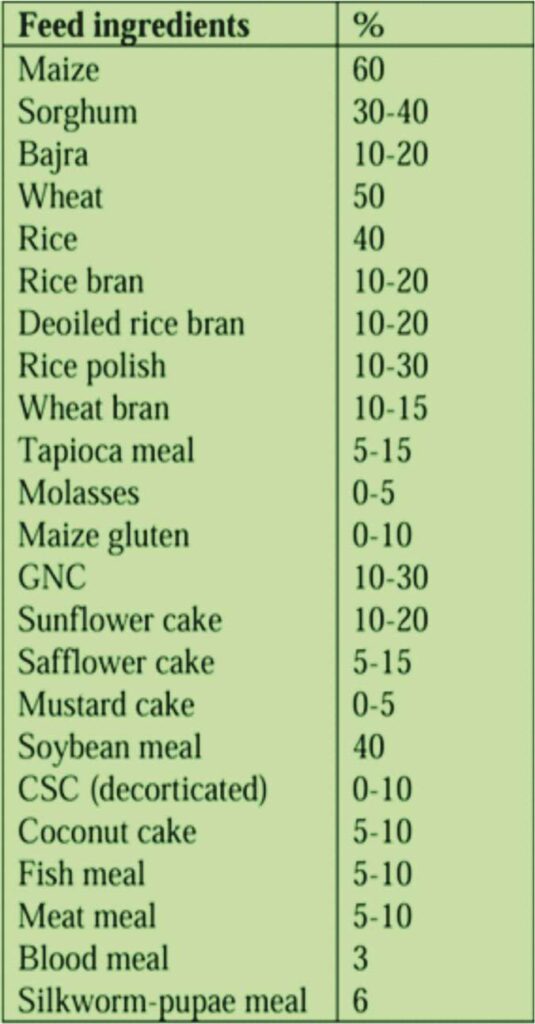
Level of Inclusion of common poultry feed ingredients
Summary:
Unconventional feeds can be valuable in poultry nutrition, providing diverse sources of protein, carbohydrates, and other nutrients. They can help reduce feed costs and enhance feed efficiency when used appropriately. Each feed type has unique characteristics, including protein and fat content, amino acid profiles, and palatability issues, which should be considered when formulating poultry diets.
Supplements are crucial nutritional additives used in animal feeds to address deficiencies in essential nutrients that are not adequately supplied by standard feed ingredients. These supplements ensure that animals receive a balanced diet, promoting optimal health, growth, and production.
Types of Supplements:
1. Mineral Supplements:
o Purpose: Provide essential minerals that may be lacking in the diet.
o Forms: Often added in synthetic forms, including organic complexes like chelated minerals.
o Examples: Calcium, phosphorus, magnesium, and trace minerals like zinc, copper, and selenium.
2. Vitamin Supplements:
o Purpose: Supply essential vitamins that are not sufficiently present in the feed.
o Forms: Provided in synthetic forms to ensure stability and bioavailability.
o Examples: Vitamins A, D, E, K, and B-complex vitamins.
3. Amino Acid Supplements:
o Purpose: Provide essential amino acids, especially those that are limiting in the diet.
o Forms: Available in synthetic forms to precisely meet dietary requirements.
o Examples: DL-methionine, L-lysine, threonine, and tryptophan.
Importance of Supplements:
1. Address Nutritional Deficiencies:
o Ensure a balanced diet by filling gaps in the nutritional profile of the feed.
o Prevent deficiencies that can lead to poor health, growth, and production.
2. Enhance Feed Efficiency:
o Optimize the use of available feed ingredients by ensuring all essential nutrients are present.
o Improve the overall nutritional quality of the feed.
3. Support Health and Growth:
o Contribute to the proper development and functioning of the animal’s body.
o Promote immune function, bone development, muscle growth, and overall well-being.
4. Improve Production:
o Enhance productivity in terms of weight gain, milk production, egg laying, etc.
o Support reproductive health and performance.
Conclusion:
Supplementation is an essential aspect of animal nutrition, ensuring that all necessary nutrients are available for optimal health and productivity. By addressing deficiencies in minerals, vitamins, and amino acids, supplements play a critical role in supporting the overall well-being and performance of livestock
Additives are non-nutritive substances incorporated into animal feed to enhance feed intake, digestion, absorption, and nutrient utilization, ultimately improving the growth and production performance of livestock, including poultry. Unlike nutritional supplements, additives do not directly provide essential nutrients but instead facilitate better use of the nutrients present in the feed.
Types of Feed Additives:
1. Antibiotics:
o Purpose: Used to prevent or control bacterial infections, thus promoting healthier and more productive livestock.
o Action: Suppress pathogenic bacteria in the gut, reducing disease incidence and improving feed efficiency.
o Consideration: Due to the risk of antibiotic resistance, the use of antibiotics as feed additives is now restricted or banned in many countries.
2. Probiotics:
o Purpose: Live microorganisms that, when administered in adequate amounts, confer health benefits to the host.
o Action: Improve gut health by balancing intestinal microflora, enhancing digestion and nutrient absorption.
o Examples: Lactobacillus, Bifidobacterium, Saccharomyces.
Additional Common Feed Additives:
3. Prebiotics:
o Purpose: Non-digestible food ingredients that stimulate the growth and/or activity of beneficial bacteria in the gut.
o Action: Serve as food for probiotics, promoting a healthy gut microbiome.
o Examples: Inulin, fructooligosaccharides (FOS), galactooligosaccharides (GOS).
4. Enzymes:
o Purpose: Break down anti-nutritional factors and complex feed components to improve digestibility.
o Action: Enhance the breakdown of fibers, starches, proteins, and phytates, leading to better nutrient utilization.
o Examples: Phytase, xylanase, protease.
5. Antioxidants:
o Purpose: Prevent the oxidation of feed ingredients, thus preserving feed quality and nutrient content.
o Action: Protect fats, vitamins, and other sensitive nutrients from oxidative damage.
o Examples: Vitamin E, selenium, ethoxyquin.
6. Growth Promoters:
o Purpose: Enhance growth rates and feed efficiency.
o Action: May include natural or synthetic substances that stimulate metabolic processes.
o Examples: Hormones, beta-agonists.
7. Flavoring Agents:
o Purpose: Improve palatability and feed intake.
o Action: Enhance the taste and smell of feed to encourage consumption.
o Examples: Sweeteners, flavor enhancers.
8. Mycotoxin Binders:
o Purpose: Neutralize or reduce the impact of mycotoxins present in contaminated feed.
o Action: Bind mycotoxins, preventing their absorption in the gut.
o Examples: Clays, yeast cell wall extracts.
Feed additives play a crucial role in optimizing the health, growth, and productivity of poultry by enhancing the efficiency of nutrient utilization and improving overall feed quality. Their strategic use, tailored to the specific needs and conditions of the livestock, can lead to significant improvements in animal performance and well-being
Antibiotics have historically been used as feed additives in poultry and swine production to promote health, growth, and productivity by mitigating the adverse effects of pathogenic organisms present in the animal’s environment. These organisms can cause subclinical infections, consuming nutrients and producing toxins that lead to intestinal inflammation and reduced nutrient absorption. Antibiotics, when administered in small amounts over prolonged periods, can suppress these microorganisms, enhance nutrient availability, reduce toxin production, and improve the overall health and growth of the animals.
Benefits of Antibiotic Feed Additives:
1. Suppression of Pathogenic Organisms: Reduces the load of harmful microorganisms in the gastrointestinal tract.
2. Improved Nutrient Availability: By reducing microbial competition, more nutrients are available for the host animal.
3. Reduced Intestinal Inflammation: Leads to thinner intestinal mucous membranes, enhancing nutrient absorption.
4. Enhanced Growth and Production: Better health and nutrient absorption result in improved growth rates and productivity.
Commonly Used Antibiotics:
– Tetracycline
– Oxytetracycline
– Auriomycins
Benefits of Probiotics as Feed Additives:
1. Enhanced Gut Health:
o Prevention of Gut Disorders: Probiotics help in maintaining a balanced gut microflora, which can prevent digestive disorders and improve nutrient absorption.
2. Improved Growth and Production:
o Growth Promotion: By enhancing nutrient absorption and gut health, probiotics contribute to better growth rates and productivity.
3. Immune System Support:
o Immune Function: Probiotics can boost the immune system, helping animals resist infections and diseases.
4. Reduction in Pathogen Load:
o Pathogen Control: By preventing pathogen colonization and reducing pathogen load, probiotics help in maintaining overall health.
Probiotics offer a valuable alternative to antibiotics in animal feeds by promoting gut health and enhancing growth and production. Their ability to competitively exclude pathogens and produce beneficial substances makes them effective in supporting overall animal well-being..
Benefits of Probiotics as Feed Additives:
1. Enhanced Gut Health:
o Prevention of Gut Disorders: Probiotics help in maintaining a balanced gut microflora, which can prevent digestive disorders and improve nutrient absorption.
2. Improved Growth and Production:
o Growth Promotion: By enhancing nutrient absorption and gut health, probiotics contribute to better growth rates and productivity.
3. Immune System Support:
o Immune Function: Probiotics can boost the immune system, helping animals resist infections and diseases.
4. Reduction in Pathogen Load:
o Pathogen Control: By preventing pathogen colonization and reducing pathogen load, probiotics help in maintaining overall health.
Probiotics offer a valuable alternative to antibiotics in animal feeds by promoting gut health and enhancing growth and production. Their ability to competitively exclude pathogens and produce beneficial substances makes them effective in supporting overall animal well-being.
Prebiotics Prebiotics are not organism, these are the substance which required by the probiotics organism or in other words these are the substance which promote the growth of probiotic organism for example FOS (fructan oligosaccharide) MOS (mannan oligosaccharide) these are carbohydrate in nature and used as energy source by probiotic organism.
– Common Prebiotics:
1. Fructooligosaccharides (FOS):
o Nature: A type of carbohydrate consisting of short chains of fructose molecules.
o Source: Found in foods like onions, garlic, bananas, and asparagus.
o Function: FOS is used as an energy source by beneficial bacteria, promoting their growth and activity in the gut.
2. Mannanoligosaccharides (MOS):
o Nature: A carbohydrate composed of mannose sugars.
o Source: Derived from yeast cell walls.
o Function: MOS can act as a prebiotic by binding to pathogenic microorganisms, preventing their adhesion to the gut lining and supporting the growth of beneficial bacteria.
Benefits of Prebiotics:
1. Support for Probiotics:
– Enhanced Growth: By providing a food source for probiotics, prebiotics help maintain a healthy balance of gut microflora.
o Improved Function: Support the activity of probiotics, enhancing their ability to inhibit pathogenic bacteria and promote gut health.
2. Improved Digestive Health:
o Gut Health: Promote regular bowel movements and prevent constipation by stimulating beneficial bacteria that produce short-chain fatty acids.
o Nutrient Absorption: Improve the absorption of minerals like calcium and magnesium.
3. Immune System Support:
o Immune Function: By fostering a healthy gut microbiome, prebiotics can enhance immune responses and overall health.
4. Disease Prevention:
o Pathogen Inhibition: Help reduce the risk of gastrointestinal infections and diseases by maintaining a balanced gut environment.