

Abstract
The global poultry market has experienced significant expansion over the past three decades, driven by rising incomes, urbanization, dietary shifts, improvements in production technologies, and evolving consumer preferences. Poultry meat and eggs are now among the most widely consumed animal protein sources globally. Despite robust growth trajectories, the sector faces multifaceted challenges, including disease outbreaks, feed cost volatility, sustainability pressures, trade tensions, regulatory complexity, and animal welfare concerns. This review examines the current dynamics of the global poultry market, identifies key growth opportunities, explores systemic and structural challenges, and outlines strategic considerations for stakeholders. The paper synthesizes production and consumption trends, discusses supply-chain transformation, and highlights policy implications relevant to producers, industry actors, and global food security agendas.
Keywords: poultry market, poultry production, consumption trends, animal health, sustainability, global trade, feed resource pressures
1. Introduction
The poultry sector occupies a central position in the global agri-food system, supplying an estimated 130 million tonnes of poultry meat and over 80 million tonnes of eggs annually (most recent FAO/USDA estimates). Poultry’s competitive advantage lies in its relative efficiency in converting feed to edible protein, rapid flock turnover, adaptability to diverse production systems, and broad consumer acceptance.
The global poultry market comprises diverse value chains—from large, vertically integrated producers in North America and Europe to smallholder and backyard operations in Africa and Asia. Structural transformation in emerging economies has accelerated poultry’s contribution to GDP, employment, and rural livelihoods. Consumption patterns reflect the interplay of economic growth, cultural food preferences, price elasticity, and health perceptions.
However, this dynamic industry operates within a complex environment marked by rising feed costs, global pandemics impacting animal and human health, environmental sustainability imperatives, and regulatory fragmentation.
Understanding the multifactorial opportunities and challenges shaping the poultry market is essential for sustainable policy and investment decisions.
2. Global Poultry Market Overview
2.1 Production Trends
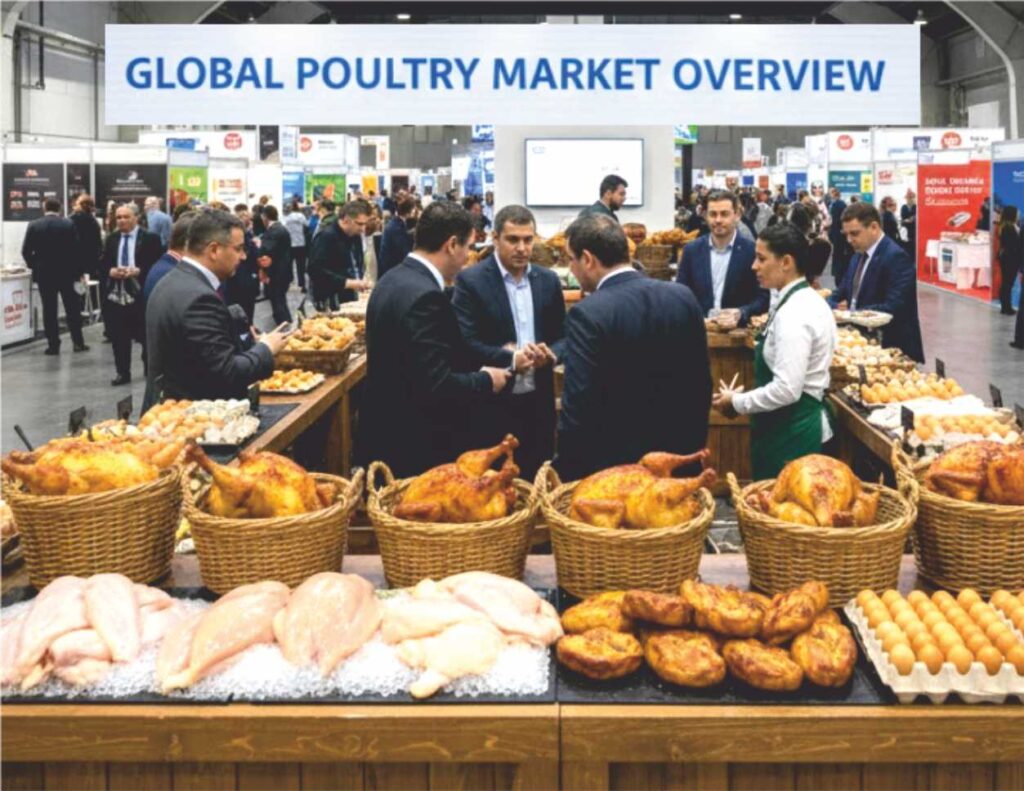
Global poultry production has grown steadily, with compound annual growth rates (CAGR) of 3–4% over the last decade. Key producers include the United States, China, Brazil, the European Union, and India. Brazil has emerged as a dominant exporter, particularly in broiler exports to the Middle East, Asia, and Africa.
Poultry’s growth outpaces other livestock sectors due to:
– Favourable feed conversion ratios (FCR).
– Short production cycles (5–7 weeks for broilers).
– Technological advancements in genetics and nutrition
– Expansion of commercial hatchery and feed mill capacity.
Regional production characteristics differ:
– North America and Europe: Highly industrialized, integrated supply chains.
– Latin America: Strong export orientation with competitive cost structures
– Asia: High consumption growth driven by population size and rising incomes
– Africa: Mixed systems with predominance of smallholder production and emerging commercial zones.
2.2 Consumption Patterns
Poultry consumption has outpaced other meats globally, with poultry meat now representing over 40% of total meat consumption in many countries. Drivers of demand include:
– Affordability relative to beef and pork.
– Perceived health benefits (lower fat content)
– Culinary versatility
– Cultural and religious acceptability (chicken widely accepted globally).
Egg consumption also remains strong as a low-cost source of high-quality protein, especially in low- and middle-income countries (LMICs).
2.3 Trade Dynamics
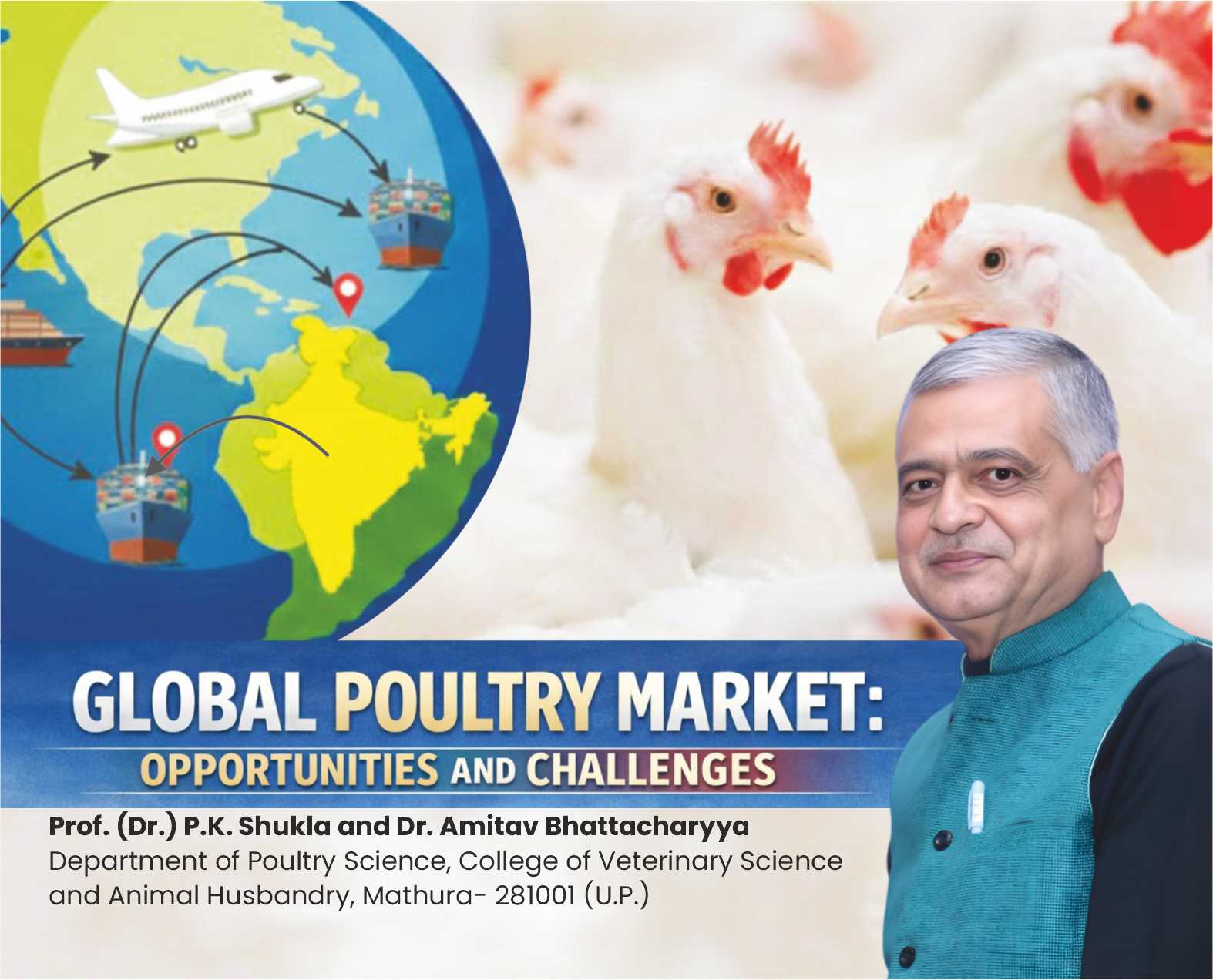
Trade in poultry products is a critical factor shaping global market balances. Key export nations (Brazil, the United States, EU-27) supply major importing regions such as China, Japan, the Middle East, and Sub-Saharan Africa. Trade policies, sanitary and phytosanitary (SPS) measures, and bilateral agreements influence market access and competitiveness.
Export growth is influenced by:
– Currency exchange rates
– SPS compliance
– Consumer preferences (e.g., halal, antibiotic-free)
– Logistic infrastructure and cold chain capacity
3. Opportunities in the Global Poultry Market
3.1 Rising Global Demand
Population growth and urbanization are projected to increase global demand for animal protein. The FAO projects meat demand to rise by 14% by 2030, with poultry accounting for a large share of this increase due to its cost competitiveness and consumer acceptance.
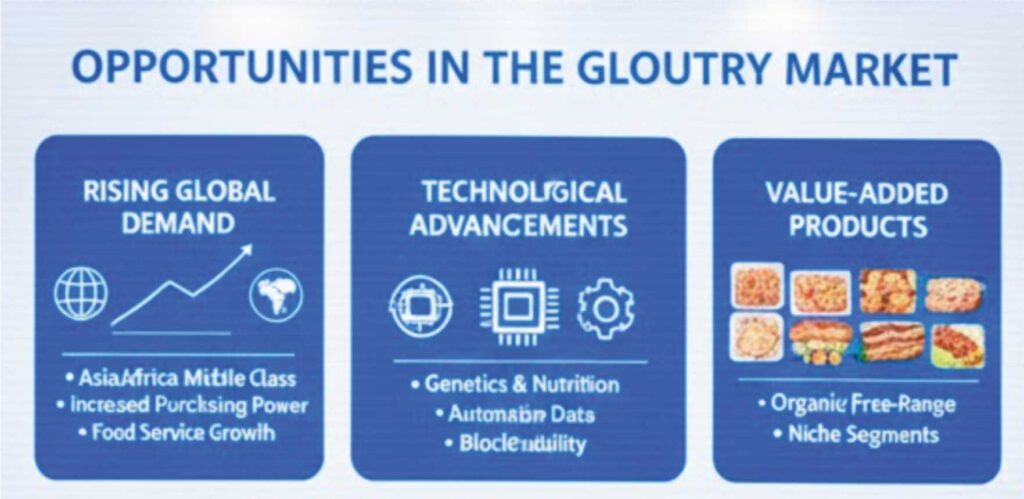
Key demand accelerators include:
– Expansion of the middle class in Asia and Africa
– Increased purchasing power and dietary diversification
– Retail and food service growth (quick service restaurants)
3.2 Technological Advancements
Innovation across the value chain presents opportunities to enhance productivity and sustainability:
– Genetics: Improved broiler and layer strains with better FCR and disease resilience.
– Precision nutrition: Formulation software and feed additives (enzymes, probiotics)
– Automation: Climate-controlled housing, automated feeders, and data-driven management
Digital tools—such as IoT sensors, predictive analytics, and blockchain for traceability—are transforming production, quality control, and supply chain transparency.
3.3 Value-Added Products and Market Segmentation
Consumers increasingly seek value-added poultry products (ready-to-eat, convenience cuts), organic and free-range options, and niche segments (e.g., antibiotic-free, non-GMO). Urban middle-income consumers drive demand for premiumization.
Emerging product categories include:
– Prepared meals.
– Specialty eggs (omega-3 enriched)
– Ethnic and functional poultry products
3.4 Export Growth and Market Diversification
Countries with cost advantages and efficient logistics can expand exports. Trade agreements (e.g., MERCOSUR preferences in the EU market) and niche market access (halal certification) create export opportunities.
Export prospects are amplified by:
– Infrastructure investment in cold chain and ports.
– SPS harmonization under WTO frameworks.
– E-commerce platforms facilitating cross-border trade
3.5 Sustainability and Circular Bioeconomy Practices
Sustainability imperatives offer opportunities for innovation:
– Feed efficiency reduces resource use and greenhouse gas emissions
– Alternative feed resources (DDGS, insect meal) reduce dependence on conventional grains
– Manure management technologies provide renewable energy and biofertilizers
Consumers and regulators increasingly value sustainability certification, carbon labelling, and responsible sourcing.
4. Major Challenges Facing the Global Poultry Market
4.1 Feed Cost Volatility
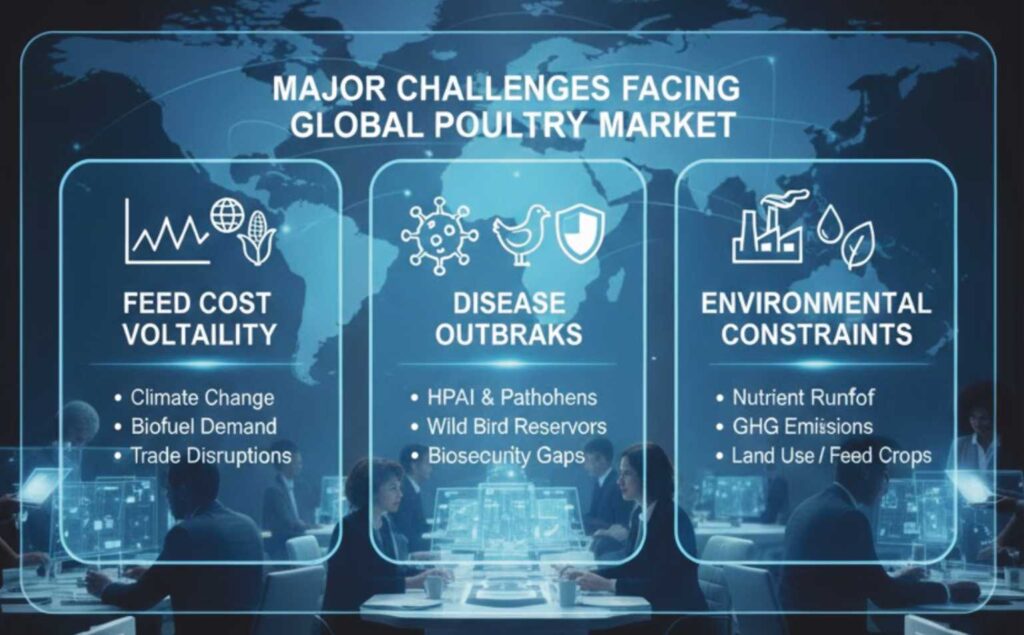
Feed accounts for 60–70% of poultry production costs. Maize and soybean price swings due to weather events, commodity speculation, and biofuel policy interactions significantly influence profitability. Feed cost volatility impacts producers’ planning and price competitiveness.
Risk factors include:
– Climate change effects on crop yields
– Competing demand from biofuel sectors
– Trade disruptions and tariff barriers
4.2 Disease Outbreaks and Animal Health Risks
Highly pathogenic avian influenza (HPAI), Newcastle disease, avian mycoplasma, and emerging viral pathogens pose ongoing risks. Outbreaks lead to flock depopulation, trade restrictions, and loss of consumer confidence.
Key challenges:
– Cross-border movement of pathogens.
– Wild bird reservoirs
– Vaccine access and cold chain logistics in LMICs
Biosecurity adoption is uneven, especially in smallholder systems.
4.3 Environmental and Resource Constraints
Poultry production, while more efficient than other meats, still contributes to environmental footprints:
– Nutrient runoff and water quality impacts.
– Greenhouse gas emissions from manure decomposition
– Land use for feed crop production
Environmental regulations impose compliance costs and may constrain expansion in sensitive regions.
4.4 Regulatory Fragmentation and Trade Barriers
Divergent regulations on food safety, animal welfare, antibiotic use, and labelling create complexity for multinational operations. SPS measures, though justified by food safety, are sometimes perceived as trade barriers.
Regulatory challenges include:
– Differing maximum residue limits (MRLs)
– Antibiotic growth promoter bans
– Varied certification requirements across markets
4.5 Consumer Perceptions and Animal Welfare Concerns
Public awareness of animal welfare, antibiotic resistance, and food safety influences purchasing behaviour. Negative media coverage of factory farming practices can suppress demand and lead to restrictive legislation.
Animal welfare certification (e.g., free-range, cage-free) increases costs and requires investment by producers.
4.6 Inequities in Market Access
Smallholder and family poultry producers face structural disadvantages:
– Limited access to quality inputs (chicks, feed, vaccines)
– Weak integration into formal value chains
– Poor access to credit and market information
Addressing inclusivity is crucial for food security in developing regions.
5. Analytical Perspectives on Key Systemic Issues
5.1 Feed Resource Dependence and Innovation Imperatives
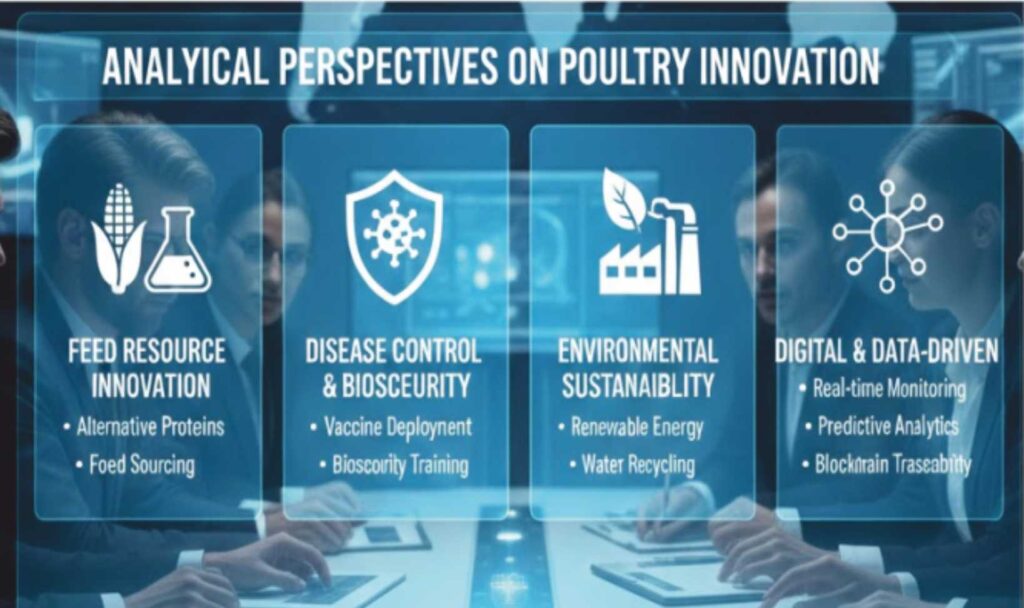
The poultry sector’s dependence on maize and soybean meal exposes it to agricultural commodity risks. Strategic diversification requires:
– Development of alternative protein sources (DDGS, legumes, single-cell proteins)
– Feed enzymes and amino acid supplementation technologies
– Localizing feed ingredient value chains
Policy support for agricultural diversification and feed industry investment is necessary.
5.2 Disease Control and Biosecurity Scaling
Global disease control requires:
– Harmonized surveillance systems
– Rapid reporting and compensation mechanisms
– Biosecurity training and infrastructure, especially in smallholder settings
Public–private partnerships can accelerate vaccine deployment and extension services.
5.3 Environmental Sustainability Integration
Life cycle assessment (LCA) frameworks help identify hotspots for environmental mitigation. Opportunities include:
– Precision feeding to reduce nutrient excretion
– Renewable energy integration (biogas from litter)
– Water recycling systems in processing plants
Sustainability reporting and carbon footprint labelling are emerging market differentiators.
5.4 Digital and Data-Driven Transformation
Digital transformation can help optimize production and supply chains:
– Real-time flock monitoring
– Predictive analytics for disease and performance
– Blockchain for traceability and food safety assurance
Investment in digital literacy and infrastructure is essential.
6. Regional Market Insights
6.1 North America
North America exhibits high levels of industry integration, advanced genetics, and robust export markets. Regulatory frameworks increasingly emphasize antibiotic stewardship and traceability.
6.2 Europe
European poultry markets are mature, with emphasis on animal welfare, sustainability, and niche segments. Regulatory stringency presents compliance costs but also premium market opportunities.
6.3 Asia
Asia represents the largest consumption market with rapid per capita meat demand growth. China, India, and Southeast Asian nations present divergent market structures—ranging from industrial poultry to traditional smallholder systems.
6.4 Latin America
Latin America’s cost-competitive producers dominate export markets, especially for broilers. Investments in processing and compliance with SPS standards enhance competitiveness.
6.5 Africa
Africa’s poultry sector is heterogeneous; many countries have smallholder dominance, limited feed industry capacity, and infrastructure constraints. However, urban demand growth signals substantial opportunities.
7. Strategic Policy and Industry Actions
7.1 Supporting Research and Development
Public and private investments in R&D can accelerate:
– Genetics for disease resistance
– Nutritional innovations
– Sustainable housing systems
Collaborative research platforms and knowledge sharing can enhance global productivity.
7.2 Enhancing Value Chain Competitiveness
Investments in cold chain, logistics, and processing infrastructure reduce post-harvest losses and expand market access. Policies that facilitate credit for small and medium enterprises can strengthen inclusivity.
7.3 Strengthening Trade Cooperation
Harmonizing SPS standards and reducing tariff barriers under multilateral frameworks can expand global trade and reduce market fragmentation.
7.4 Promoting Sustainable Intensification
Incentivizing nutrient management, renewable energy adoption, and reduced GHG emissions aligns sector growth with climate commitments.
7.5 Consumer Education and Market Development
Transparent labelling, food safety assurance systems, and communication about nutritional benefits can bolster consumer confidence.
8. Conclusion
The global poultry market stands at the intersection of rapid demand growth, technological evolution, and systemic challenges that require integrated policy and industry responses. Opportunities abound in expanding consumption, trade, product diversification, and sustainability innovation. Simultaneously, feed cost volatility, disease risks, regulatory complexity, and environmental pressures demand strategic investment, coordinated governance, and adaptive industry practices. Sustainable growth of the global poultry sector hinges on balanced approaches that combine productivity enhancement with welfare, environmental stewardship, and economic inclusion. The interplay of global trade, domestic policy, and local production systems will shape the future trajectory of this vital agri-food sector.