



Abstract
Over the past several decades, India’s poultry industry has transformed from traditional backyard rearing dominated by small-holders to a highly commercialized, vertically integrated, large-scale industrial sector. This metamorphosis has propelled India into the ranks of global leaders—particularly in egg production—and has reshaped domestic food security, nutrition profiles, rural livelihoods, and export potential. This paper traces the historical evolution, charts recent growth and statistical milestones, analyses the key drivers, assesses socio-economic and nutritional impacts, discusses challenges, and outlines future opportunities. Despite structural constraints — notably feed-cost pressures, infrastructure gaps, and export competitiveness — the scale and dynamism of India’s poultry sector position it as a potential global game changer.
1. Introduction
The poultry sector in India has undergone a dramatic transformation over the past few decades. Once dominated by small backyard flocks used for household consumption, today it constitutes one of the most dynamic, fast-growing segments of India’s agricultural and livestock economy. The shift toward commercial-scale, vertically integrated poultry farming has enabled unprecedented growth in egg and meat production, improved accessibility of affordable protein, triggered export growth, and provided livelihoods to millions.
2. Historical Background and Structural Transition
2.1 Traditional Poultry Practices
Traditionally, poultry farming in India was characterized by backyard rearing — small flocks of indigenous birds managed by rural households, primarily for eggs and occasional meat consumption. These birds lay far fewer eggs compared to modern commercial breeds; typical indigenous hens would produce perhaps 60–80 eggs per year. This model, while suiting subsistence and household needs, offered limited scale, low efficiency, and negligible surplus for commercial sale or export. As a result, India’s poultry sector remained underdeveloped for long, especially when compared to large-scale poultry industries in Western countries.
2.2 Emergence of Commercial & Hybrid Poultry Farming
The transformation began with gradual adoption of improved and hybrid poultry breeds, combined with investments in hatcheries, feed mills, broiler farms, processing units, and cold-chain infrastructure. Modern hybrid layer birds now produce significantly more eggs, and broiler breeds grow to market weight in just 35–42 days — a far cry from the slower growth rates of traditional birds.
Technological advances in breeding, feed formulation, veterinary care, and disease management made poultry farming more efficient, reliable, and profitable. Small-scale poultry rearing began to give way to commercial and vertically integrated operations, wherein a single enterprise manages parent stock, hatcheries, feed supply, rearing, processing, and distribution. This structural shift laid the foundation for rapid scaling up of production, improved quality, and the capability to meet urban and rural demand, as well as to explore export markets.
2.3 Integration into the Livestock Value Chain
Over time, poultry became part of a broader livestock value-chain, along with dairy, meat, fisheries, etc. According to an industry review, the livestock sector — including poultry — has seen a Compound Annual Growth Rate (CAGR) of 7.9% between 2014–15 and 2020–21, and its contribution to total agricultural Gross Value Added (GVA) rose from 24.3% to 30.1%. Thus, poultry moved from a peripheral, subsistence-level role to an integral, high-growth segment of India’s agricultural economy.
3. Scope and Scale of Growth: Recent Data & Trends

3.1 Egg Production: Unprecedented Scale
– According to the latest data from the Agricultural and Processed Food Products Export Development Authority (APEDA), total egg production in India during 2024–25 was 138.38 billion eggs.
– The most recent government data for 2024–25 reports 149.11 billion eggs, indicating continued growth.
– Of this, commercial poultry contributes the bulk: ~129.16 billion eggs from commercial farms, while ~20.11 billion come from backyard poultry — i.e., roughly 85.40% commercial and 14.60% backyard.
– The per capita availability of eggs in 2024–25 is estimated at 106 eggs/year.
These numbers indicate a massive scaling up of egg production — a cornerstone of India’s poultry revolution.
The distribution of production across states is concentrated: the top five egg-producing states in 2022–23 were Andhra Pradesh (≈ 20.13%), Tamil Nadu (≈ 15.58%), Telangana (≈ 12.77%), West Bengal (≈ 9.93%), and Karnataka (≈ 6.51%) — together accounting for about 65% of the national total.
This regional concentration reflects climatic, infrastructure, and industry-cluster advantages in southern and eastern India.
3.2 Poultry Meat & Broiler Production
While egg production often gets the spotlight, broiler-meat production has also witnessed rapid growth: broiler meat in India is estimated at around 5 million tonnes annually.
As per a recent government annual report (2024-25), per-capita meat availability (across all meats) rose — poultry’s growing share contributed significantly.
Moreover, the poultry feed industry — critical for meat and egg production — has expanded: poultry feed production was reported at 27 million metric tons per year (as of 2022), supporting the massive poultry stock and enabling economies of scale.
3.3 Economic Market Size and Forecasted Growth
– According to a 2025 market analysis by Expert Market Research (EMR), India’s poultry market was valued at USD 30.46 billion in 2024.
– The same analysis projects a Compound Annual Growth Rate (CAGR) of 8.1% during 2025–2034, with the market size expected to reach USD 66.37 billion by 2034.
– Government-published projections also show a growth trajectory, with increasing demand driven by urbanization, rising incomes, changing dietary habits, and organized retail/food-processing sectors. These economic data reflect that poultry is now not just a subsistence activity but a major agribusiness sector with significant economic value.
4. Drivers of the Poultry Boom
The rapid rise of poultry in India can be traced to a confluence of demographic, economic, technological, structural, and policy factors.
4.1 Rising Incomes, Urbanization, and Changing Dietary Patterns
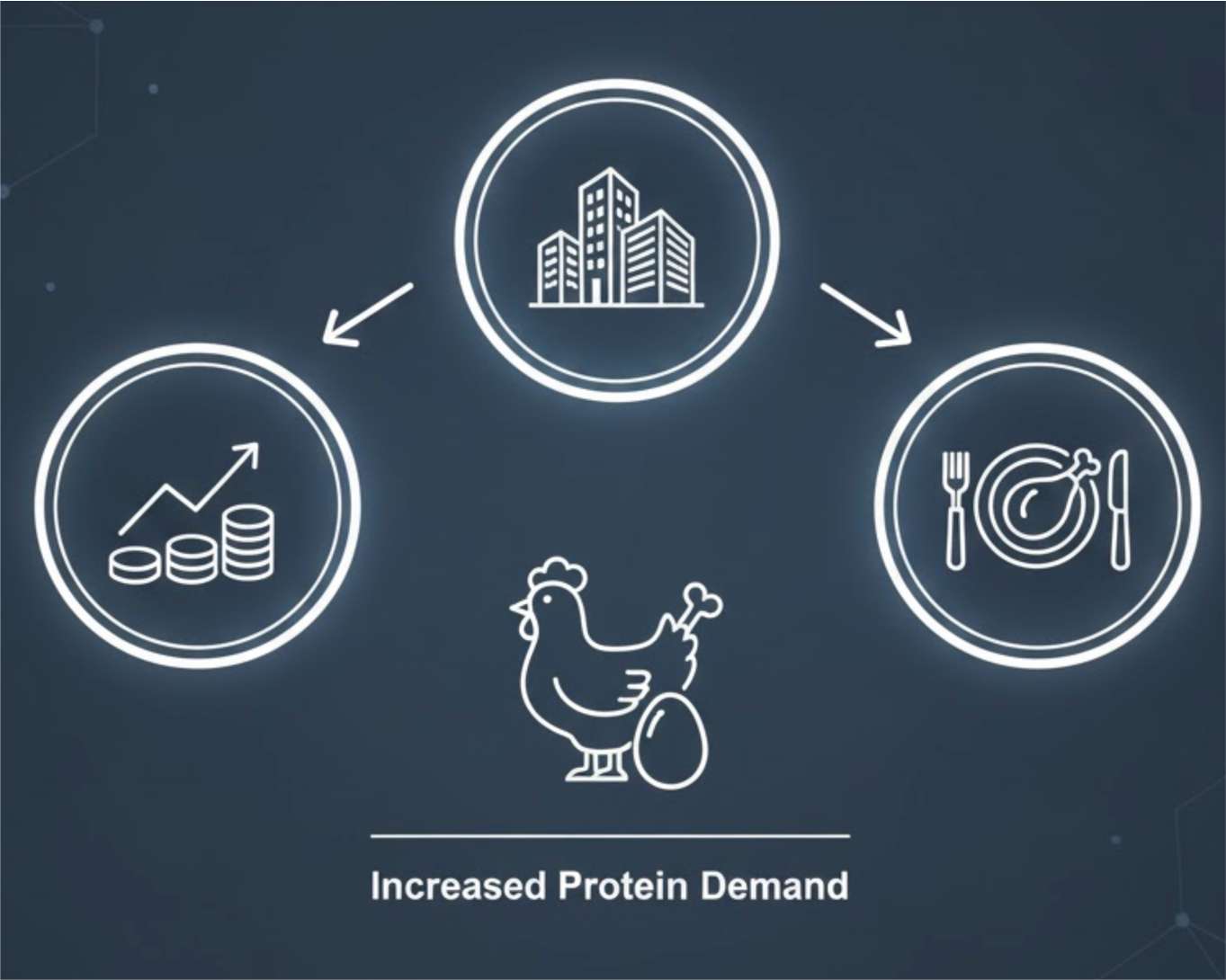
India’s growing middle class, rising per-capita income, and increasing urbanization have driven dietary transitions. Eggs and chicken — as relatively affordable, high-quality animal proteins — have become more accessible and acceptable across economic classes.
As diets diversify, there is increasing demand from Tier II and Tier III cities, alongside traditional urban centres. The rising awareness regarding nutrition and protein deficiencies further fuels demand for poultry.
4.2 Commercialization & Vertical Integration
One of the most transformative structural changes is the emergence of vertically integrated poultry enterprises. These enterprises manage parent stock and grandparent stock, hatcheries, feed mills, broiler/layer farms, processing units (slaughterhouses, dressing plants), cold-chain logistics, and distribution networks.
Such integration facilitates economies of scale, reduces transaction and marketing costs, ensures biosecurity, standardizes quality, and enables efficient supply of eggs and meat — at prices affordable to consumers and margins viable for producers. Additionally, the shift in market preference — from live birds being sold locally to processed, dressed, chilled or frozen chicken, packaged eggs, egg-powder, and other value-added products — has accelerated formalization and industrialization of poultry value-chains.
4.3 Growth of Feed Industry, Input Supply & Technology
A robust feed industry underpins commercial poultry operations. Balanced feed — based on maize, soybean meal, etc. — ensures rapid growth, better productivity, and lower feed conversion ratio (FCR). Advances in veterinary care and disease management further buttress productivity.
Simultaneously, investments in hatcheries, processing infrastructure, cold-chain logistics, meat-processing plants, egg-packing and grading units have created a viable ecosystem for large-scale production and distribution.
These developments mark a shift from fragmented, household-level poultry rearing to organized, industry-scale poultry farming.
4.4 Market Demand, Nutrition Awareness & Institutional Push
Growing awareness of protein deficiency and the nutritional benefits of eggs and lean meat has increased demand among Indian consumers. Poultry — being relatively more affordable than red meat and easier to integrate into diets — is increasingly preferred.
Furthermore, expanding organized retail chains, food-service industries, and fast-food outlets have increased demand for processed/chilled chicken and value-added egg/poultry products, providing a stable market for producers.
Government support — through enabling infrastructure, policies facilitating feed availability (corn, soy), support for processing units, and export promotion via the APEDA framework — has played a supportive role.
5. Socio-Economic and Nutritional Impacts

5.1 Food Security & Protein Access
India has long faced challenges of protein-energy malnutrition and inadequate intake of high-quality animal protein, especially among lower-income households. The dramatic rise in poultry — eggs and chicken — offers a scalable, affordable, and accessible solution to improve protein intake across a wide swath of the population.
With per-capita egg availability at ~106 eggs/year, and increasing meat availability, poultry contributes substantially to bridging the “protein gap.”
Eggs, in particular, represent one of the highest-quality proteins per rupee and are more affordable than most red meats, making them an effective vehicle for nutritional security, especially among economically weaker sections.
5.2 Livelihood Generation, Rural Employment, and Value-Chain Jobs
The poultry value-chain — from hatcheries, feed mills, poultry farms, processing plants, cold-chain logistics, transport, retail outlets — employs millions of people across urban, rural, and semi-urban India. The shift from subsistence-level backyard poultry to organized, commercial poultry creates diverse jobs beyond traditional crop agriculture.
Moreover, contract-farming models enable smallholders to participate in poultry production without bearing full risk. Under these models, integrators supply chicks, feed, veterinary care; farmers rear birds under supervision, and integrators buy back the produce. This ensures stable income for rural households and reduces production risk.
Thus, poultry acts as an engine for rural income diversification, reducing dependence on traditional agriculture and enhancing rural livelihoods.
5.3 Economic Contribution & Agriculture Diversification
As noted earlier, the livestock sector — dairy, meat, poultry, fisheries — has increased its share of agricultural Gross Value Added (GVA) from ~24.3% to ~30.1% between 2014–15 and 2020–21, indicating rising economic significance.
The poultry segment, in particular, contributes significantly to this growth. The rising market valuation (USD 30.46 billion in 2024, projected to reach USD 66.37 billion by 2034) underscores poultry’s importance in national agribusiness and food systems.
Thus, poultry provides a viable pathway for agricultural diversification beyond crop-based farming, offering resilience against crop failures, diversification of rural income sources, and buffer against agricultural uncertainties.
6. India’s Position in Global Poultry Landscape
6.1 Global Rankings in Egg and Meat Production
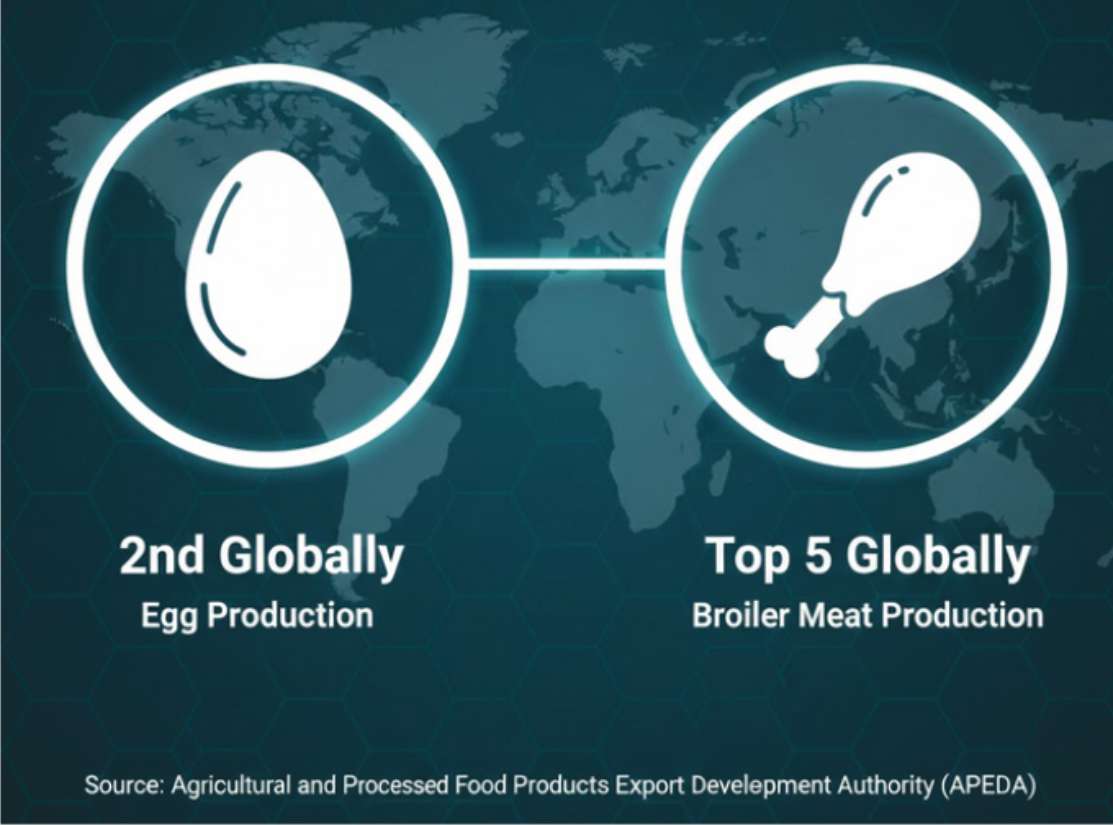
India is now among the top producers globally: according to APEDA, India ranks 2nd globally in total egg production.
On the meat front, India is among the leading producers of poultry meat worldwide; various sources place India among the top 5 globally in broiler meat production.
This is a remarkable achievement, especially considering India’s recent transition from traditional poultry rearing — underscoring how rapidly the industry has scaled.
6.2 Export Growth & Global Reach
According to APEDA data, in fiscal year 2023–24, India exported 1,275,234.90 metric tons of poultry products, valued at USD 184.58 million.
Major export destinations include Gulf and nearby countries such as Oman, Sri Lanka, Maldives, United Arab Emirates (UAE), and Qatar.
The growth of processing units — producing dressed chicken, frozen meat, egg powder, frozen egg-yolk, etc. — has facilitated exports, especially given rising global demand for affordable poultry protein.
According to market research, the availability of digitally integrated cold-chain logistics, temperature-monitored supply chains, and compliance with international standards are enabling Indian poultry producers to build trust among institutional buyers and global QSR chains.
These developments suggest that India is not only catering to domestic demand but is also increasingly competitive on the global poultry stage.
7. Challenges and Constraints
Despite its remarkable rise, India’s poultry sector faces several structural and external constraints that can hinder long-term sustainability and global competitiveness.
7.1 Feed Price Volatility and Input Cost Disadvantage
A major challenge lies in feed costs — especially maize (corn) and soybean meal, which form the bulk of poultry feed. Compared to many major poultry-exporting countries, feed price in India is significantly higher. For instance, industry officials report domestic corn costs at ₹23–25/kg versus ₹14/kg in competing countries; soybean meal is ~30% more expensive domestically.
Feed constitutes around 80–85% of total production cost in poultry farming, according to industry associations.
This cost disadvantage undercuts competitiveness in export markets where producers operate at lower feed costs, making poultry from India relatively costlier. Consequently, despite production scale, India may find it harder to compete globally on price.
7.2 Infrastructure Gaps: Processing, Cold Chain & Value Addition
While the number of poultry dressing plants and processing units has grown, large-scale, export-ready modern processing plants remain relatively limited. According to a 2024–25 report, only a small fraction of slaughterhouses and meat-processing plants are formally registered with export authorities.
Moreover, cold-chain infrastructure — essential for frozen chicken, chilled meat, egg-powder, and other value-added products — remains uneven across geographies. This hinders consistent supply, quality control, and scalability of exports.
Limited processing capacities, hygienic standard compliance, packaging, traceability, and cold-storage infrastructure collectively constrain India’s ability to fully exploit export potential and to realize value-added processing at scale.
7.3 Biosecurity, Disease Risk, and Regulatory Challenges
Large-scale poultry farming carries inherent disease risks — from avian influenza to other pathogens. Maintaining biosecurity, veterinary care, bird health monitoring, and adherence to sanitary standards is critical. However, regulatory enforcement, veterinary infrastructure, and disease surveillance remain patchy in many regions.
Inadequate disease control or outbreak events can lead to flock losses, supply disruptions, price volatility, and erosion of consumer confidence — domestically and internationally. This remains a systemic risk for large-scale poultry operations in India.
7.4 Domestic Consumption Economy vs Export Incentives
Although India is a large poultry producer, per-capita consumption remains relatively modest: per capita chicken consumption is estimated at only 6–7 kg per person per year; per capita egg consumption at ~106 eggs/year.
Given the enormous domestic market — with over 1.4 billion people — many industry players emphasise catering to internal demand rather than exports. As quoted in industry reports: “With such a vast domestic population and high protein-deficiency, why export?”
This dynamic sometimes conflicts with export-oriented ambitions, especially when input costs or global competition make exports less profitable.
7.5 Feed-Input Constraints & Agricultural Linkages
Poultry feed depends heavily on maize and soybean meal — both agricultural commodities subject to domestic production variability, input price volatility, and competition from other sectors (e.g., ethanol, livestock feed for dairy, etc.). Recent global and domestic trends — including policies favouring biofuel and ethanol production — can affect corn availability and price. Any sustained rise in feed costs directly impacts profitability, which in turn affects the scalability and sustainability of poultry operations. For India to remain competitive globally, securing low-cost, reliable feed supply — possibly through agricultural policy, supply chain efficiency, or alternative feed sources — is essential.
8. Opportunities: Why India Could Be a Global Game Changer
Despite the challenges, several structural and market advantages position India’s poultry sector to scale further — domestically and internationally — and potentially become a global “poultry powerhouse.”
8.1 Massive Domestic Market & Rising Protein Demand
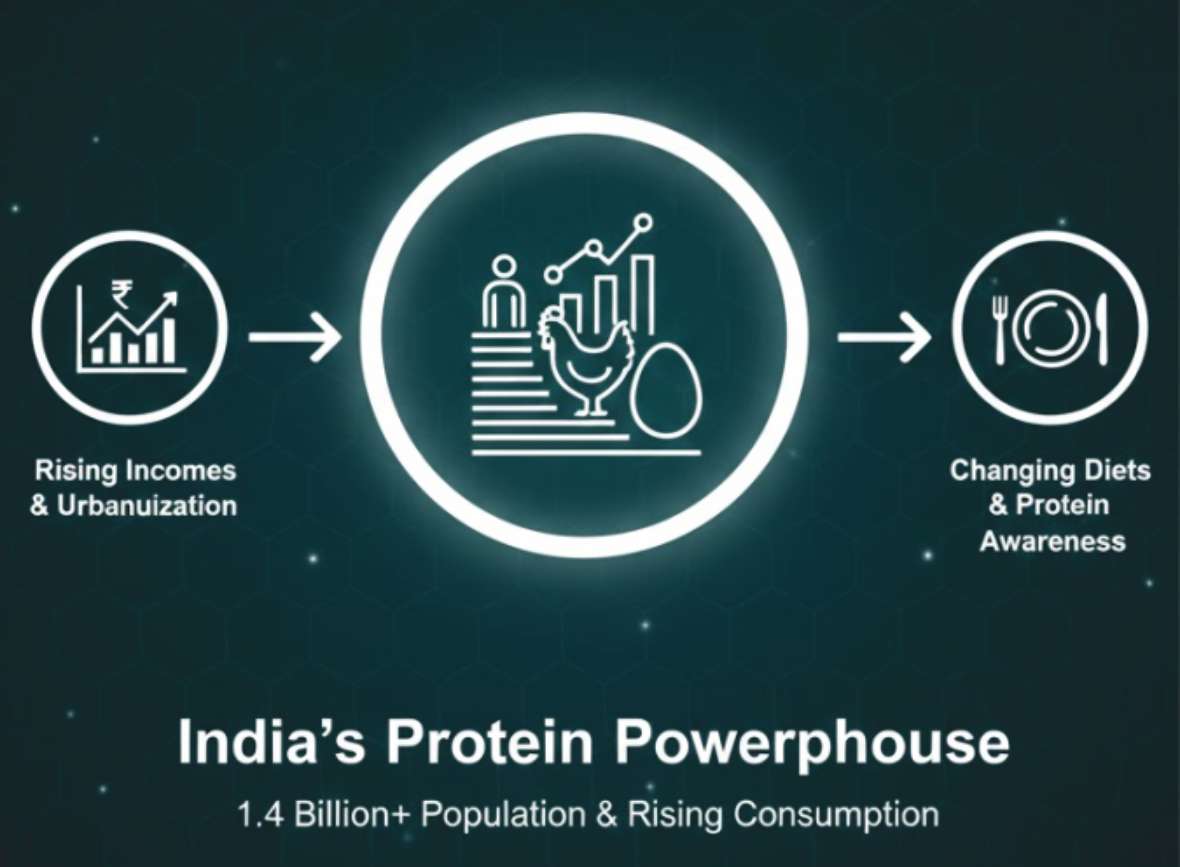
India’s vast population — over 1.4 billion — continues to urbanize, with rising incomes and changing consumption patterns. Demand for high-quality, affordable protein (eggs, chicken) is likely to increase substantially in coming decades. If per-capita consumption trends rise — even if not to the global average — the sheer population base means demand volumes will be enormous. This offers massive growth potential for domestic poultry producers. With nutrition awareness growing and dietary preferences shifting, poultry (especially eggs and lean chicken meat) is poised to become a staple source of animal protein for many more Indians.
8.2 Scaling Exports — Value Addition, Processed Products & Cold-Chain Gains
India’s existing production scale, combined with expansion of processing capacity, cold-chain logistics, and compliance to international sanitary standards, can help build a robust export-oriented poultry infrastructure.
Processed products — frozen dressed chicken, cuts, egg powders, frozen egg-yolk, ready-to-cook chicken products — tested through cold-chain logistics and standard packaging, can meet demand in international markets, especially in the Middle East, Africa, Southeast Asia, and South Asia.
With disciplined investments in processing plants, hygiene standards, traceability, and supply-chain management, India can become a reliable supplier of low-cost poultry proteins — challenging traditional exporters.
8.3 Employment, Rural Development, and Agro-Industrial Linkages
Scaling poultry farming and allied value-chains (feed mills, hatcheries, processing, logistics, retail) can generate substantial employment across rural and semi-urban India. This helps diversify rural livelihoods, reduce dependence on crop agriculture, and provide stable income sources.
Moreover, development of allied industries — feed, veterinary, packaging, cold-storage, transport — can spur agro-industrial growth, infrastructure development, and rural entrepreneurship.
8.4 Nutrition Security & Public Health Benefits
Expanding poultry production — particularly eggs — can significantly improve access to affordable, high-quality protein and micronutrients (vitamins, minerals) for millions of Indians. This can contribute to reducing undernutrition, improving child and maternal health, and enhancing overall public health outcomes.
Eggs — relatively cheap, nutrient-dense, and widely acceptable — can be a cornerstone for nutrition security programs, school feeding schemes, and basic food security for underprivileged populations.
8.5 Scope for Innovation: Breeding, Feed Alternatives, Value-Added Products
India’s poultry industry is still evolving; there remains considerable scope for innovation:
– Development of feed substitutes — to reduce dependence on maize/soybean, manage costs, and improve sustainability.
– Genetic improvements: breeding for disease-resistance, improved feed-conversion ratio (FCR), higher egg yield, faster growth.
– Value-added products: ready-to-cook chicken, processed meats, egg-based foods, frozen foods, packaged convenience foods.
– Export-oriented product lines: chilled/frozen chicken, processed eggs, egg powders — to serve export markets efficiently.
With innovation, India can leapfrog traditional production constraints and define a competitive advantage beyond just “low cost”.
9. Policy, Strategy and Institutional Implications
For India to realize the full potential of its poultry sector — domestically and globally — a multilayered strategy is needed, involving producers, industry stakeholders, government, and trade policy. Key policy/strategic implications:
1. Feed Security & Agricultural Policy Coordination
– Promote stable production of maize, soybean, and other feed inputs.
– Encourage alternative feed sources, research for cost-efficient feed, feed-substitutes.
– Consider trade or subsidy policies to manage feed costs, ensure affordability for poultry producers.
2. Infrastructure & Cold-Chain Development
– Invest in modern processing plants, meat-processing units, hygienic slaughterhouses.
– Expand cold-chain logistics, refrigerated transport, cold-storage — to support frozen meat and processed poultry export.
– Promote compliance with international sanitary and phytosanitary (SPS) standards to facilitate exports.
3. Support for Value-Addition & Export Diversification
– Encourage production of value-added poultry products (frozen meat, frozen egg products, ready-to-cook, packaged eggs).
– Incentivize export-oriented units, possibly through special economic zones, tax/ subsidy support, export facilitation, capacity-building.
4. Rural Livelihoods & Smallholder Inclusion
– Expand contract-farming models for smallholders to participate without high capital risk.
– Provide training, extension services, veterinary support to small-scale producers.
– Support backyard poultry schemes (especially in underserved regions) to enhance nutrition and livelihoods at grassroots.
5. Biosecurity, Animal Health & Regulatory Oversight
– Strengthen veterinary infrastructure, disease surveillance, vaccination, biosecurity protocols.
– Enforce hygiene, traceability, slaughterhouse standards to ensure food safety and export compliance.
6. Nutrition and Public Health Initiatives
– Incorporate eggs and poultry into national nutrition programs (school feeding, maternal health, child nutrition).
– Promote awareness of nutritional benefits of eggs and poultry among lower-income communities.
By aligning agricultural, trade, public health, and industrial policies — India can catalyse a “poultry-led transformation” that enhances food security, rural livelihoods, export earnings, and nutritional outcomes.
10. Critical Analysis & Risks Ahead
While the trajectory of Indian poultry is impressive, several critical risks and trade-offs deserve careful consideration.
10.1 Price and Input Volatility
As noted, feed costs — largely driven by maize/soybean prices — are a major vulnerability. Global commodity price fluctuations, domestic supply constraints, competition from other sectors (e.g., biofuel), and policy shifts can render feed expensive, eroding margins and pressuring prices.
This volatility may disincentivise producers, hinder scaling, or push up consumer prices — undermining affordability, nutritional access, and export competitiveness.
10.2 Infrastructure & Institutional Bottlenecks
Despite growth in processing and cold-chain capacity, much of India’s poultry still operates in fragmented, small-scale settings. Export-ready, large-scale processing infrastructure remains limited; regulatory compliance, traceability, hygiene standards, packaging — all need strengthening.
Inequities in infrastructure across states can lead to regional disparities, inefficiencies, and quality variations — which may hurt long-term competitiveness.
10.3 Disease Risk, Biosecurity, and Animal Welfare
Large-scale poultry farming increases the risk of disease outbreaks (e.g., avian influenza), which can have severe economic and public health impacts. Maintaining biosecurity, veterinary care, regular health monitoring, and outbreak preparedness is essential but challenging — especially in regions with limited veterinary infrastructure or poor compliance.
Additionally, large-scale industrial poultry farming may raise concerns about animal welfare, environmental impacts, waste management, and antibiotic use — all of which could invite public scrutiny and regulatory pressures.
10.4 Domestic Consumption Patterns & Cultural/ Dietary Constraints
Despite rising demand, per-capita consumption of eggs and poultry meat remains well below global averages. Cultural, religious, economic constraints, and dietary preferences (e.g., vegetarianism) in large segments of Indian population limit poultry consumption.
Moreover, price-sensitive consumers might substitute to cheaper proteins or plant-based diets if poultry prices rise, or if supply becomes unstable — reducing demand stability.
10.5 Export Competitiveness & Global Competition
India faces stiff competition from major poultry exporting countries (e.g., USA, Brazil, EU nations) with established supply chains, lower feed costs, advanced processing facilities, and established brand/trade relationships. Given the feed-cost disadvantage, infrastructural constraints, and regulatory complexities (sanitary standards, trade barriers) — competing in global markets at scale may be challenging. Therefore, India’s success internationally would depend not just on production volume, but on quality, value addition, logistics, compliance, cost management, and strategic trade policy.
11. Case Study / Illustrative Example: State-wise Dynamics & Regional Patterns
While nationwide data reflects aggregate success, the poultry boom in India is unevenly distributed, with certain states contributing disproportionately.
As per APEDA and recent government reports, the leading egg-producing states (2022–23) are Andhra Pradesh, Tamil Nadu, Telangana, West Bengal, and Karnataka — together contributing around 65% of the national egg output.
This concentration reflects a combination of favourable climate, established commercial poultry enterprises, better infrastructure (hatcheries, feed mills, processing plants), transport connectivity, and market access — particularly in southern and eastern India.
In contrast, many northern and central states remain under-represented in poultry output, due to factors such as climate (cold, variation in temperature), lesser infrastructure, underdevelopment of feed and processing industries, lower investments, and limited integration into commercial value-chains.
This uneven distribution has important implications: for achieving equitable growth, food-security across regions, and maximizing national potential, efforts are needed to expand poultry infrastructure and capacities beyond existing hubs — into under-served states and rural areas.
Moreover, encouraging smallholder inclusion via contract farming or backyard poultry schemes can help spread benefits more widely, especially in less-developed states.
12. Future Outlook & Strategic Recommendations
Given the structural dynamics, market trends, and socio-economic context, the future of Indian poultry looks promising — provided certain strategic and policy measures are adopted. Below are key recommendations and outlook:
1. Promote Feed-Security & Cost Efficiency
– Invest in domestic maize/soybean production to ensure stable input supply.
– Research and promote alternative, cost-effective feed sources (e.g., agricultural by-products, insect-based proteins, sustainable feed substitutes).
– Introduce policy measures to stabilize feed prices (subsidies, buffer stocks, trade facilitation) to strengthen cost competitiveness.
2. Expand Processing, Cold-Chain, and Value-Added Capacities
– Encourage establishment of modern, export-ready processing plants and meat-processing units across more states.
– Build cold-chain logistics, storage infrastructure, refrigerated transport to support frozen meat and egg-product exports.
– Incentivize production of value-added products (frozen chicken cuts, frozen egg-powder, ready-to-cook chicken, processed meat) to cater to global markets and institutional buyers.
3. Support Smallholders & Inclusive Models
– Scale up contract-farming models to incorporate small farmers, reducing entry barriers, sharing risk, and ensuring supply stability.
– Provide extension services, veterinary support, training, access to credit/inputs for smallholders and backyard poultry farmers.
– Expand backyard-poultry and rural poultry schemes — especially in underserved states — to ensure nutrition security and rural income generation.
4. Strengthen Biosecurity, Animal Health & Regulatory Compliance
– Build veterinary infrastructure, disease surveillance systems, vaccination programs, and biosecurity protocols nationwide.
– Enforce hygiene, slaughterhouse standards, traceability, packaging and sanitary norms to meet domestic consumption and export requirements.
– Implement environmental and animal-welfare guidelines to ensure sustainability and ethical practices.
5. Facilitate Exports & International Competitiveness
– Use trade policy, export facilitation, and negotiated sanitary / phytosanitary (SPS) agreements to access new markets.
– Promote brand-building for “Made in India” poultry: emphasize quality, compliance, cost advantage.
– Encourage exports of processed poultry and egg products — which add more value than raw/fresh meat.
6. Promote Nutrition & Public Health through Poultry Products
– Integrate eggs and poultry into national nutrition and food-security programs (e.g., school meal schemes, maternal/child nutrition).
– Run awareness campaigns about the nutritional benefits of eggs and chicken.
– Encourage socially inclusive models (rural backyard poultry, low-cost egg supply) to reach low-income populations.
If executed, these strategies can help India not only sustain its rapid growth, but also emerge as a global supplier of affordable, high-quality poultry and egg products, while enhancing domestic nutrition and rural livelihoods.
13. Conclusion
The rise of Indian poultry — from small-scale backyard flocks to a large, organized, commercially viable industry — represents one of the most transformative developments in India’s agricultural and food landscape. The scale of egg and meat production, economic value, and socio-economic impact is unprecedented. India now ranks among the world’s top producers of eggs and poultry meat; domestic production volumes run into hundreds of billions of eggs and millions of tonnes of meat annually. The economic market is vast and growing; the value chain has formalized; demand — both domestic and potential global export — is substantial. At the same time, structural challenges — feed-cost disadvantages, infrastructure gaps, regulatory and biosecurity risks — remain real constraints. How India addresses these issues will determine whether its poultry sector merely remains a domestic success or becomes a global game changer. Nevertheless, given India’s demographic advantage, rising protein demand, improving infrastructure, institutional support, and potential for value-addition and exports — the poultry sector is well-positioned for further growth, impact, and global integration.
In essence, the rise of Indian poultry is not just an agricultural success story — it is a potential driver of nutritional security, rural development, economic growth, and global trade share. With strategic vision, policy support, and sustainable practices, India could transform poultry production into one of the key pillars of 21st-century agribusiness and food security — both nationally and globally.